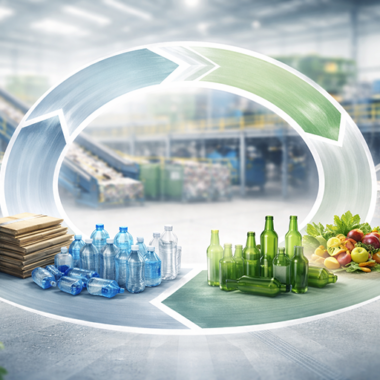
Each year in late February and early March, Australians turn out in force for Clean Up Australia Day activities. Beaches, parks, waterways and roadsides are cleared of litter in a visible reminder of shared responsibility for our environment.
But for the waste industry, clean up days also reveal something else: how fast the waste stream is changing and how much more complex it has become to process safely and efficiently.
What volunteers collect today is not the same mix of materials that was being picked up even five years ago. Alongside bottles, cans and packaging, there is a fast-growing new problem showing up in clean up bags across the country: discarded vapes containing lithium batteries.
The clean up itself is only the first step. What really determines the environmental outcome is what happens next when waste processors need sort and process the waste.
Clean up days: essential, but only the beginning
Clean up days play a critical role beyond litter removal. They:
- prevent pollution entering waterways and marine environments
- highlight consumption and disposal behaviours
- expose the scale and composition of waste escaping formal systems
- create a moment of national focus on waste and recycling
They also increasingly intersect with broader education efforts led by organisations such as Planet Ark, which has spent decades helping Australians understand how and where different materials should be recycled. Through its national Recycling Near You platform, Planet Ark provides practical guidance on correct disposal pathways for everything from household packaging to batteries and e-waste.
However, clean up waste is rarely “clean” in a recycling sense. By the time it reaches a bin, truck or transfer station, it is often:
- wet, sandy or contaminated
- made up of mixed materials
- inconsistent in size and density
This is where modern waste processing technology and infrastructure determines the difference between landfill dependency and genuine resource recovery.
The journey of clean up waste in Australia
Collection and consolidation
Most clean up material is collected locally and transported via council or contracted waste services to a transfer station, recycling facility or landfill. While volunteers may separate recyclables where possible, real-world conditions mean streams could recombine during handling.
Planet Ark’s education initiatives highlight why this matters. When items are disposed of incorrectly, or when complex products are not designed for easy separation, even well-intentioned recycling efforts can be undermined before material reaches a processor.
How commingled waste is processed
Material Recovery Facilities and sorting plants
Where recovery is viable, commingled waste is directed to specialised commingled processing facilities designed to separate mixed streams. Modern Australian sorting plants rely on layered separation, typically including:
- controlled infeed and metering
- mechanical screening by size and shape
- magnetic and eddy current separation for metals
- air separation for light fractions
- manual or assisted picking for quality control
Even with advanced technology, front-end preparation and early separation are critical. Poorly presented material reduces throughput, increases downtime and contaminates recovered commodities.
Another layer of complexity unique to Australia is distance. Unlike many overseas markets, Australia’s waste processing infrastructure is heavily concentrated around metropolitan centres, while clean up activity, and waste generation, extends deep into regional and remote areas. This places additional pressure on processors to recover value locally and minimise transport volumes and costs. In this context, effective onsite or near-site sorting is not just an efficiency measure, but a practical necessity for regional operations.
A growing problem: vapes and embedded batteries
One of the most significant changes in clean up waste over the past few years is the rise of single-use and disposable vapes.
From a processing standpoint, vapes create a perfect storm:
- hard plastic housings that resemble recyclable polymers
- embedded lithium batteries that are not visible at first glance
- mixed construction that makes automated separation difficult
When vapes enter commingled waste streams, they introduce serious risks:
- battery fires in collection vehicles and facilities
- safety hazards for manual pickers
- contamination of otherwise recyclable plastic streams
Public education platforms like Recycling Near You increasingly flag vapes and batteries as items requiring special handling but clean up days continue to surface how frequently these products end up in general litter and mixed waste. You are almost guaranteed a sighting of discarded vapes around our cities and public transport areas.
Why sorting is becoming a safety issue, not just a recovery issue
Historically, sorting focused on recovering value. Today, it must also focus on risk reduction.
Effective sorting allows processors to:
- identify and remove vapes and battery-containing items early
- protect staff and infrastructure
- prevent fires and unplanned shutdowns
- improve the quality of recovered hard plastics and metals
Manual picking, supported by good visibility, controlled belt speeds and safe working environments, remains one of the most reliable ways to intercept problem items before they cause harm.
What clean up days are telling waste processors
Clean up days provide a real-world snapshot of what is leaking into the environment and, ultimately, into processing facilities. The message is clear:
- waste streams are becoming more complex
- consumer products are often introduced to consumers with little to no regard for the waste challenge they will later create
- batteries, and specifically lithium batteries, are no longer confined to traditional e-waste categories
- hard plastics increasingly hide embedded hazards
- processing systems must adapt to prevent new forms of waste ending up in landfill
Processors who rely on outdated assumptions about material composition face higher risk, higher downtime and higher costs.
Equipment that supports safer, smarter processing
To handle modern commingled waste, including emerging streams like vapes, facilities increasingly need:
- controlled infeed systems to slow and spread material
- dedicated sorting and picking stations for early interception
- solutions that offer mobility
- flexible layouts that adapt to changing waste profiles
- reliable balers and compactors matched to clean, sorted outputs
The principle is simple: separate first, process second.
Waste Initiatives works with waste processors, councils and commercial operators to design sorting and compaction systems that reflect today’s realities, not yesterday’s waste streams.
That includes:
- sorting solutions for commingled general waste
- mobile and modular picking stations
- vertical balers, horizontal balers and compactors for recovered recyclables
- systems engineered for safety, throughput and Australian conditions
- locally stocked parts and support services for customers that minimise downtime
- nationwide service in both metro and regional areas
If you are a waste processor and your facility is dealing with mixed waste streams that contain contamination, hard plastics and emerging battery risks, Waste Initiatives can help design a sorting and processing solution tailored to your operation. Get in touch with our solutions specialists and we’ll work with you to find the right solution for your waste challenge.
Latest news
Australia Steps Up: Stronger Laws & Action on Illegal Tyre Dumping
Introducing West Salem Machinery (WSM) to the Vertech Range