
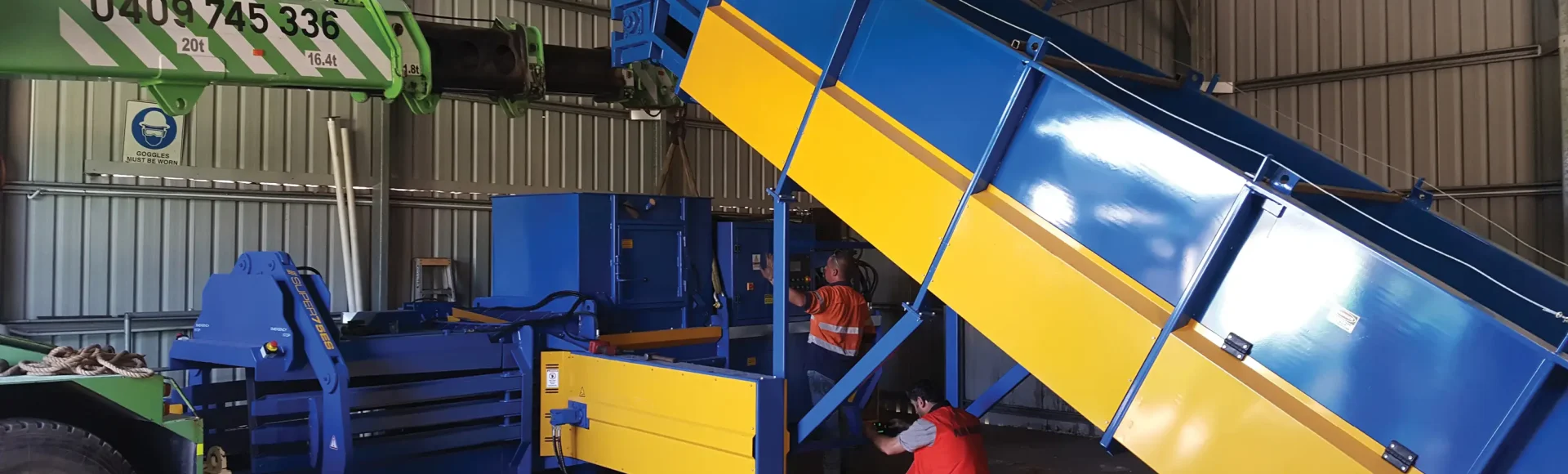
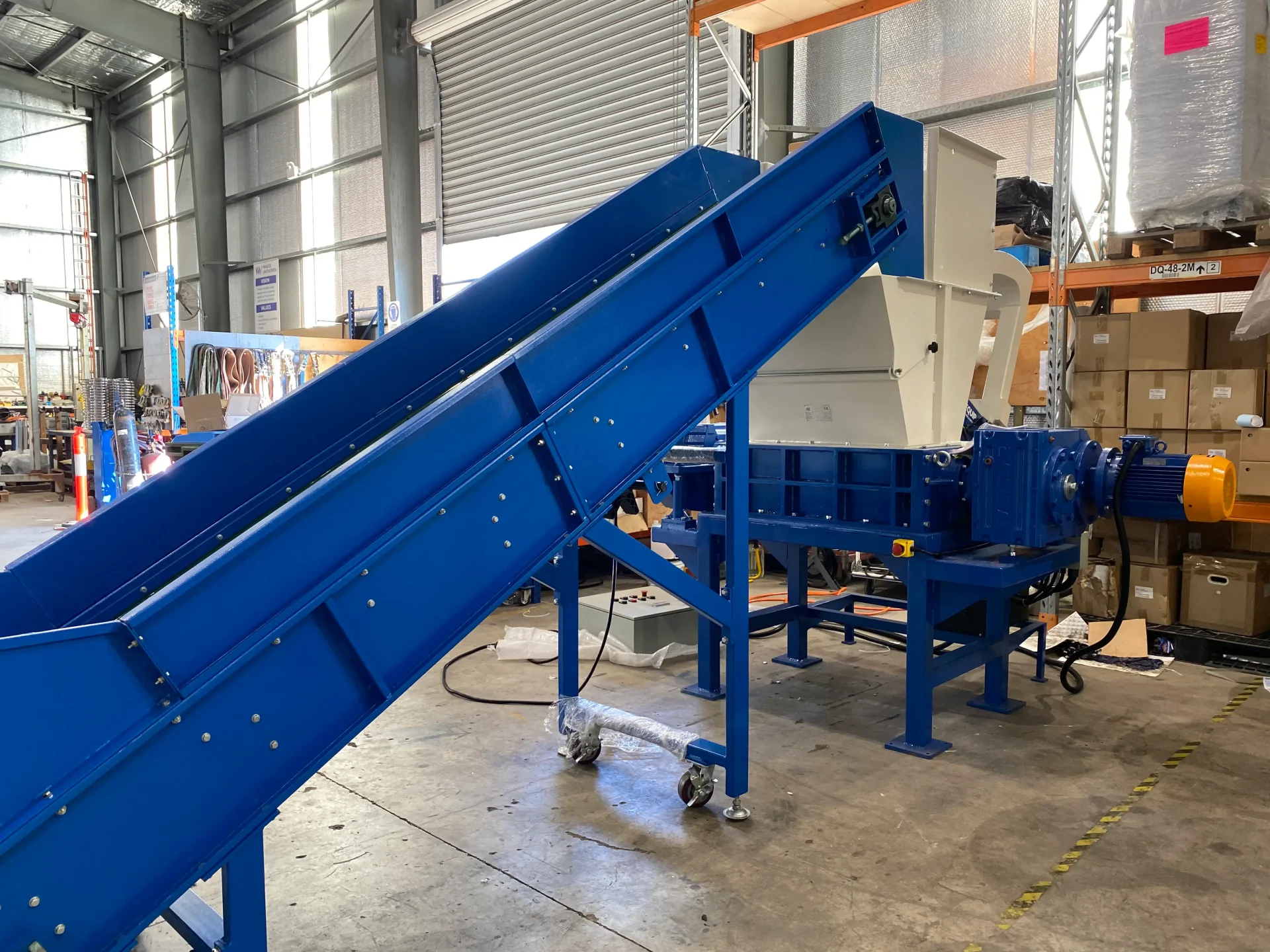
Heavy-duty conveyors for waste management
Conveyors act as the central nervous system for waste management operations, keeping materials moving across receival, sorting, processing, storage and dispatch zones. That’s why even a targeted conveyor upgrade can improve operational flow, safety, and efficiency.
For over 40 years, Waste Initiatives has supplied Australian facilities with premium-quality industrial conveyor belts and systems to boost productivity and profitability.
If your business handles high volumes of goods and recyclables, our experts have the in-depth experience to help you optimise waste material management. We’ll work with you every step of the way to provide the right fit-outs for your requirements.
We supply standalone conveyors, replacement conveyors, custom components and complete turnkey conveyor installations. Whether you need a single unit or a fully integrated system, we can tailor a practical solution to suit your site, workflow and budget.
Contact us today for a consultation on how our waste conveyors can cut costs, save time and support sustainability.
Discover the benefits of industrial conveyor belt systems

Faster recycling processes
Remove bottlenecks in busy processing areas. Recycling conveyor belts transfer high volumes of waste materials quickly without manual handling. By linking shredders, balers, hoppers, sorting stations, bins, and other equipment, these systems streamline each stage of the recycling process so it can run smoothly.

More control & consistency
Gain more control over how materials move through your facility. Instead of relying on ad hoc handling, teams can direct waste and recyclables through a steady, planned process. This improves visibility, reduces downtime and makes it easier to manage busy production or processing areas.

Cost savings
Reduce the need for forklifts, trolleys and other mobile equipment. By streamlining short-distance material movement, conveyors can help lower labour, fuel, maintenance and equipment wear over time. As well as cutting handling and transportation costs, they make it easier to reclaim valuable resources for potential resale.

Superior onsite safety
Minimise the risk of strains, sprains and fatigue-related injuries. With a waste conveyor system moving materials mechanically, workers can avoid unnecessary lifting, carrying and pushing. Plus, a well-designed system can also help separate people from hazardous materials, moving loads, and dangerous machinery.

Reduced environmental impact
Support sustainability with a more effective recycling process. A conveyor system improves sorting accuracy and aids resource recovery before waste reaches landfill. By transporting waste throughout your facility, conveyors can also reduce forklift use, site congestion and fuel consumption.

Better use of site space
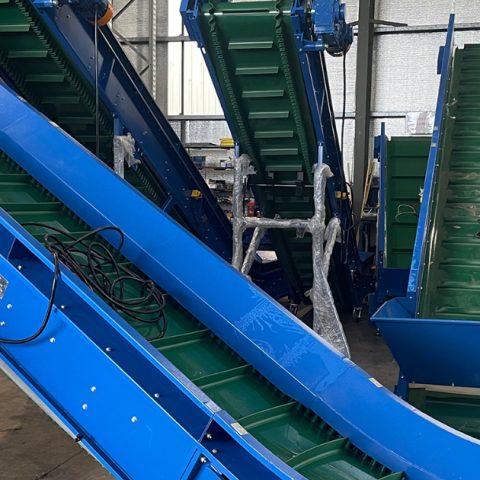
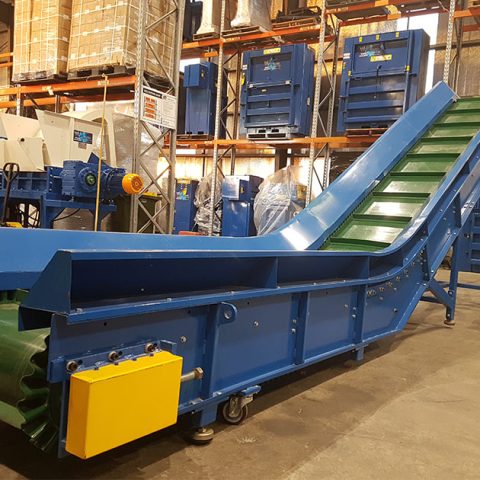
Make the most of available space. Industrial conveyor systems can be designed around the layout of your facility, including flat, inclined, elevated or custom transfer sections. This allows materials to be transferred through tight, awkward or high-traffic areas more efficiently, typically without needing to redesign the whole site.
Room to scale
Future-proof your waste management setup. As material volumes grow, conveyor belt systems can often be extended, reconfigured or connected to new equipment. This gives businesses a practical way to increase capacity, improve waste handling and add automation as their needs evolve.
Selecting a conveyor system for your business
With so many types and configurations available, choosing the right conveyor for your business can be a challenging feat.
Waste Initiatives is here to help. To determine the ideal conveyor system and conveyor belts for your facility, our on-site engineers consider your product and process requirements.
Key factors include:
- The size, weight, and nature of the waste management product you are processing
- The speed at which the conveyor belt will run
- The environment (i.e., inside, outside, wet, dry)
- Whether your product will travel on an incline
- Whether your product impacts on loading
We can also work with you to install custom equipment to any specification, from concept, manufacturing and final fit out. In turn, you’ll receive a reliable, adaptable and cost-effective conveyor system built for safe, energy-efficient operation.

Projects

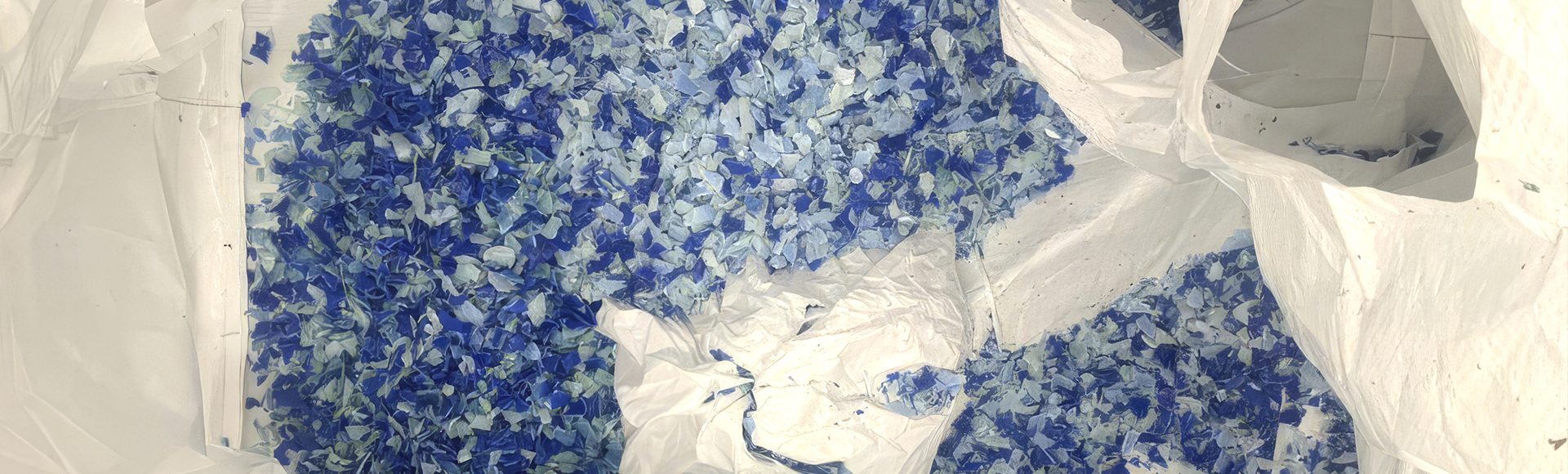
HDPE Drum Shredding
Hoganholme QLD
Cormack Holdings (Tricorbraun), a specialist in closure manufacturing for the food, beverage, and pharmaceutical markets, faced a challenge with its plastic moulding lines. The purgings produced were too large to be processed through their existing inline granulators.
Key Results
HDPE
Diverted from Landfill
Downsize
& Reuse of Plastics
Frequently asked questions
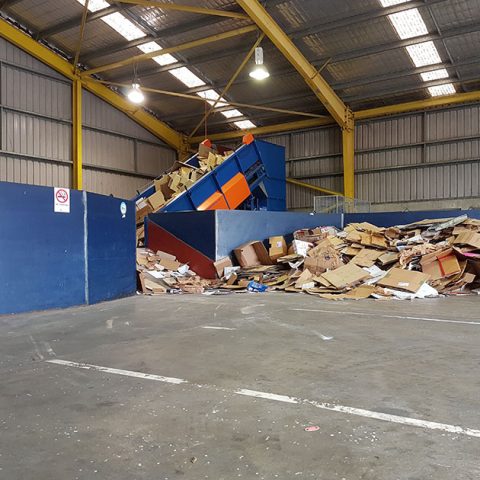
A conveyor is a material handling system that moves refuse, recyclables or other waste materials from one part of a facility to another. In waste management operations, they are often used to transfer materials between receival areas, sorting stations, shredders, balers, bins and storage areas.
Waste conveyor systems can handle a wide range of materials, including cardboard, shredded paper, wood offcuts, rubber and metal scraps, used tyres, e-waste, plastic packaging, construction debris and recyclable items.
As materials move along the conveyor belt, operators or automated sorting equipment can inspect, separate and remove unwanted items before the next processing stage.
For waste processing facilities, conveyor systems help improve workflow, reduce manual handling and support safer, more efficient material movement. They are especially useful in high-volume sites where waste needs to move continuously through sorting, recovery, shredding or baling processes.
Industrial conveyor belts and systems are built to handle demanding environments. With the right belt, frame and components, they can move heavy, abrasive, dirty or sticky materials while withstanding daily use across sorting, shredding, baling and transfer areas.
For unrivalled durability, the conveyor should be matched to the material type, load weight, site layout and operating hours. Regular checks on belt tracking, rollers, bearings and drive components also help reduce wear and prevent avoidable downtime.
The most common conveyor belts used in Australia’s waste management facilities are:
- Belt conveyors: A common option for moving mixed waste, recyclables, cardboard, plastics and other materials between sorting, processing and storage areas.
- Troughed conveyors: Designed to carry loose or bulk materials over longer distances. The troughed shape helps contain material on the belt and reduce spillage.
- Plate-supported conveyors: Suitable for sorting and transfer applications where the belt needs stable support beneath the material stream.
- Chain-driven conveyors: Built for heavier waste and high-volume recycling operations where the system needs extra strength and durability.
- Steel belt conveyors: Used for tough or abrasive materials such as scrap metal, construction waste, concrete fragments and other loads that may damage lighter belts.
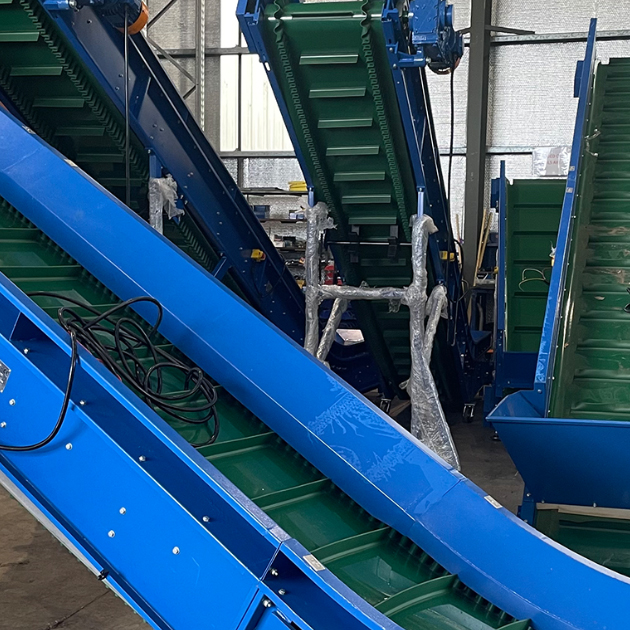
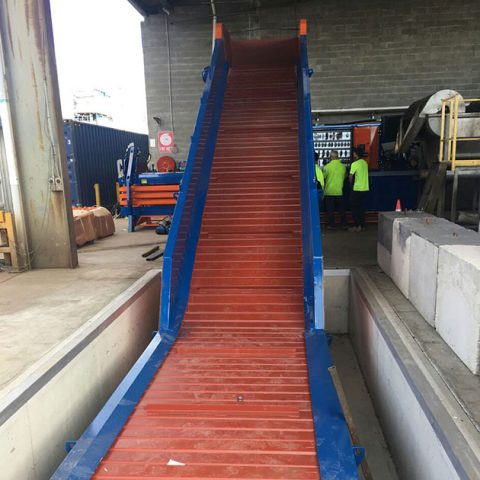
- Cleated incline conveyors: Designed to move loose materials up an incline. Raised cleats help stop waste, recyclables or shredded material from sliding back down the belt.
Ultimately, the right conveyor belt depends on the material being handled, load weight, required throughput, transfer distance, incline angle and the level of wear expected on the system.
At Waste Initiatives, we can determine and deliver the best conveyor belt for your site. Enquire today to learn more.
A screw conveyor is a bulk material handling machine that moves loose materials through a tube or trough using a rotating spiral screw called an auger.
As the auger turns, it pushes material from the inlet in a steady, controlled flow to the discharge point, where it exits to be processed, stored or loaded.
Screw conveyors are often used to move powders, granules, sludge, food waste, recyclables and other dry, wet or semi-solid materials. In waste and recycling facilities, they help transfer material between equipment while reducing spillage and keeping the process more contained.
Screw conveyors can run horizontally or on an incline, depending on the site layout and the material being handled. Shafted screw conveyors suit many free-flowing bulk materials, while shaftless screw conveyors are often better for wet, sticky, stringy or irregular waste because there is no centre shaft for material to wrap around or clog.
At Waste Initiatives, our specialists are on hand to help you determine whether this is the most suitable solution for your waste management system.
A conveyor system improves recycling efficiency by keeping materials moving at a steady speed through each processing stage. This helps teams sort, separate and transfer waste streams without constant manual loading, double handling or delays between equipment.
In busy recycling facilities, even small pauses can slow the whole line. Conveyors reduce those interruptions by feeding materials consistently into sorting stations, shredders, screens, balers and storage areas.
This creates a smoother workflow, helps operators process higher volumes and makes it easier to recover valuable materials before they are lost to general waste.
For high-volume recycling operations, an effective conveyor system can also improve throughput without relying only on extra labour.
Technology is making conveyor systems in the recycling industry faster, more accurate and easier to manage than ever. Modern systems can combine conveyors with sensors, variable speed controls, optical sorters, magnets, screens and robotic picking equipment to improve material flow and reduce manual handling.
Key improvements include:
- More precise sorting: Optical sorting, sensors and automated separation equipment can identify and separate materials such as plastics, metals, cardboard, glass and e-waste with greater consistency.
- AI and robotic sorting: Artificial intelligence and robotic sorting systems can identify materials by shape, colour, composition and even brand packaging at high speed. Conveyor systems can integrate with optical sorting, magnets, eddy current separators and other automated recovery technologies.
- Better feed control: Variable speed controls help operators manage how much material enters each processing stage, reducing blockages and line slowdowns.
- Less contamination: Automated sorting systems can remove unwanted materials earlier in the process, helping improve the quality of recovered recyclables.
- Reduced downtime: Monitoring systems can track belt movement, feed rates and equipment issues, helping teams identify maintenance needs before they cause major stoppages.
- Higher recovery rates: By keeping materials moving through the right sorting and processing points, conveyor technology helps facilities recover more usable material before it reaches landfill.
- Scalable processing: Modular conveyor systems can be expanded, repositioned or connected to new equipment as material volumes and site requirements change.
Experience these benefits with an innovative conveyor system from Waste Initiatives. Enquire now to get started.
The cost of a conveyor system depends on the conveyor type, length, belt specification, frame construction, motor size, site layout and the materials being handled.
A small infeed or discharge conveyor will usually cost less than a heavy-duty waste receival, sorting or transfer conveyor designed for high-volume recycling operations.
Custom configurations can also affect the final price. These may include cleated belts, sidewalls, hoppers, guarding, variable speed controls, incline sections, integration with shredders or balers, and installation work.
Waste Initiatives can prepare a detailed conveyor belt and system quote based on your processing requirements.
Commercial hire purchase options are also available for conveyor equipment, even in the most remote locations.
Enquire today for more information.
Trusted by clients across Australia


Make an enquiry
Thanks to over 40 years of experience in the design and supply of high-quality conveyor belts and systems, we can offer the latest waste management technology available in the world today.
With hundreds of customers in all states and territories of Australia, you’re in good company. We’re worth a call.