As Australia moves steadily toward a more circular economy, Food Organics and Garden Organics (FOGO) programs are no longer a future ambition. They are here, expanding, and under increasing pressure to perform. Councils, processors, and commercial waste generators are all being asked to deliver better recovery outcomes, lower contamination, and higher-quality end products.
At the centre of this shift sits a deceptively simple idea: clean feedstock.
It is easy to overlook. After all, food waste is food waste… right?
In reality, the difference between a clean organic stream and a contaminated one is the difference between a system that works and one that struggles to deliver.
What Is “Clean Feedstock”?
Clean feedstock refers to organic material that is free from contaminants before it enters downstream processing.
In a FOGO context, this typically includes:
- Food waste (including meat, dairy, fruit, vegetables, and fish and fish bones)
- Garden organics (green waste, leaves, small branches)
And critically, it excludes:
- Plastics and soft plastics
- Glass
- Metals
- Packaging (both rigid and flexible)
- Shells and large bones
On paper, this sounds straightforward. In practice, it rarely is.
Modern waste streams are complex. Food waste often arrives packaged, partially processed, or mixed with non-organic materials. Even small amounts of contamination can compromise the entire batch.
Clean feedstock is not just about what goes in. It is about what is removed before processing begins.
The Problem: Contamination and Its Consequences
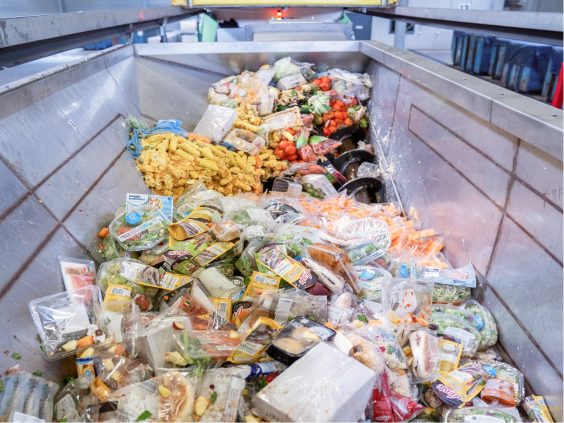
FOGO systems don’t fail because of a lack of volume. They fail because of a lack of control.
Contamination is the single biggest barrier to effective organics recovery, and it shows up in multiple ways across the process.
1. Material Contamination
Packaging is the most obvious issue. Supermarket waste, food manufacturing by-products, and hospitality waste often arrive still wrapped, sealed, or contained.
When this material is fed directly into processing systems:
- Plastics break down into microplastics
- Glass fragments contaminate compost
- Metals damage equipment
The result is a stream that is no longer suitable for high-quality recovery.
2. Poor Downstream Performance
Contaminated feedstock directly impacts how processing systems perform.
In composting operations, contamination can:
- Reduce microbial activity
- Slow down decomposition
- Lead to inconsistent compost quality
In anaerobic digestion (AD) systems, the impact is even more pronounced:
- Reduced biogas yields
- Increased system wear
- Higher maintenance and downtime
Simply put, dirty inputs create inefficient systems.
3. End Product Quality and Market Risk
The final output is where the consequences become visible.
- Compost with visible contamination struggles to meet standards
- Microplastics reduce market acceptance
- End users lose confidence in the product
For processors, this creates a commercial risk. If the output cannot be sold or reused, the entire value chain breaks down.
Why Clean Feedstock Matters
Clean feedstock is not just a technical requirement. It is the foundation of performance, compliance, and long-term viability.
Compost: Quality In, Quality Out
Composting relies on biological processes that are sensitive to contamination.
When feedstock is clean:
- Microbial activity is more consistent
- Decomposition is faster and more efficient
- The final compost is higher quality and more marketable
This translates directly into better recovery outcomes and stronger revenue streams.
Anaerobic Digestion: Maximising Biogas Yield
In AD systems, feedstock quality directly influences energy output.
Clean organic material allows for:
- Higher methane production
- More stable digestion processes
- Reduced equipment wear
Contaminants, on the other hand, act as a drag on the system. They reduce efficiency while increasing operational complexity.
Compliance and Future-Proofing
With tightening regulations and growing scrutiny on contamination levels, clean feedstock is becoming a compliance requirement, not just a best practice.
As FOGO mandates expand, particularly across states like New South Wales, processors and waste generators will need to demonstrate:
- Low contamination rates
- High recovery efficiency
- Consistent output quality
Clean feedstock is the starting point for all three.
How to Achieve Clean Feedstock
Achieving clean feedstock is not about a single piece of equipment. It is about designing a system that removes contamination before it becomes a problem.
Two technologies sit at the core of this approach: depackaging and sorting.
Depackaging: Unlocking Organic Value

Depackaging systems, such as those offered by Mavitec, are designed to separate organic material from its packaging.
This is particularly critical for:
- Supermarket waste
- Food manufacturing waste
- Packaged expired goods
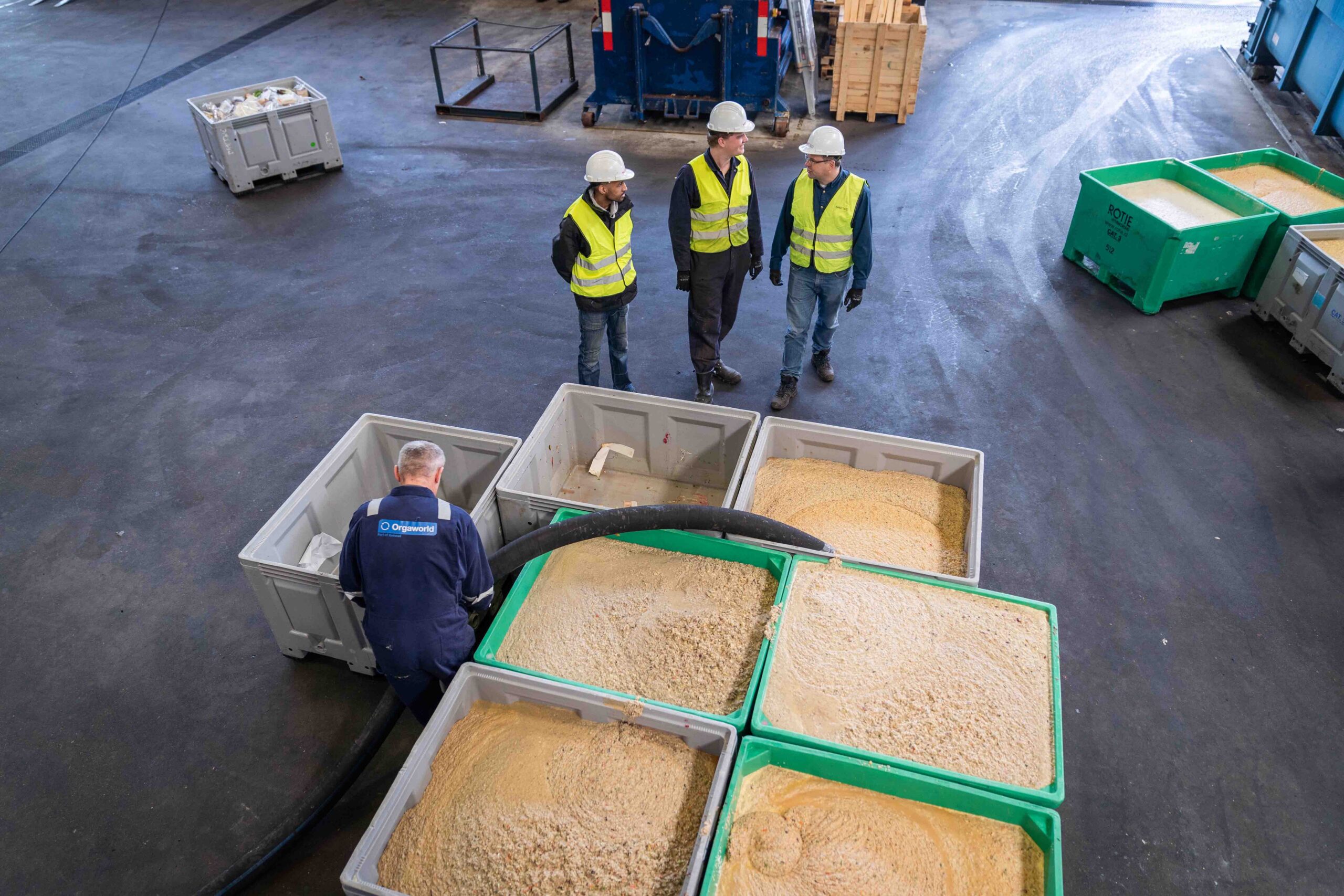
Instead of sending this material to landfill, depackaging systems:
- Extract a clean organic fraction (up to 99.7% purity)
- Separate packaging for recycling or disposal
- Produce a slurry suitable for AD or composting
This transforms a contaminated waste stream into a high-value feedstock.
It also shifts the conversation from “waste disposal” to resource recovery.
Sorting: Refining the Stream
Sorting is not a step that follows depackaging. It is a critical step that comes before it.
Before material can even enter a depackaging unit, contaminants that cannot be processed must first be removed. Items such as large metals, rigid plastics, oversized materials, and non-organic waste can damage equipment or reduce the efficiency of the separation process.
Sorting protects downstream systems while ensuring that only suitable feedstock progresses through the process.
Sorting plays a central role across Construction and Demolition (C&D), Commercial and Industrial (C&I), and organic waste streams, where incoming material is often mixed, inconsistent, and unpredictable.
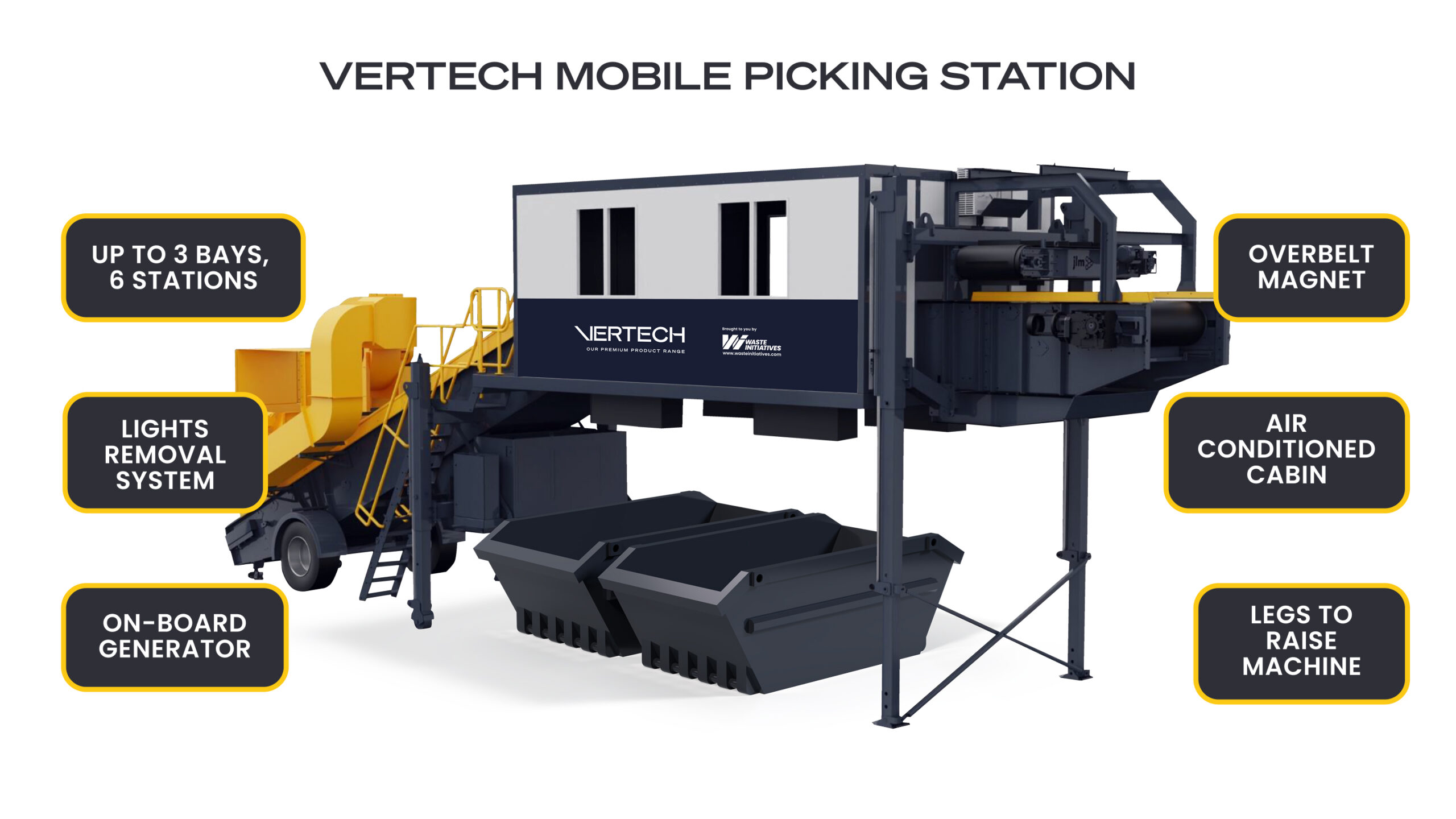
Picking stations, particularly mobile and modular systems, are designed to handle this variability. They allow operators to remove unsuitable materials at the front end of the process, improving feedstock quality before it reaches depackaging, composting, or anaerobic digestion systems.
Mobile sorting stations add another layer of operational flexibility. From a finance perspective, their portability often makes them easier to structure within asset finance arrangements, as they are not locked into a single fixed installation.
Operationally mobile sorting stations provide significant advantages in regional and remote environments, where distances between waste generation points and processing facilities can be substantial. The ability to relocate equipment closer to the source of waste reduces transport requirements, lowers handling costs, and improves overall system efficiency across multiple sites.
When combined with mechanical separation technologies such as trommels, magnets, and air systems, sorting becomes a proactive contamination control step rather than a reactive one.
The outcome is a cleaner, more consistent feedstock entering the next stage of processing, setting the foundation for higher recovery rates and better-quality outputs.
Designing Systems for Clean Output
Clean feedstock does not happen by accident. It is engineered.
The most effective FOGO systems are designed with contamination removal built into every stage:
- Pre-processing
- Depackaging to remove bulk contamination
- Primary separation
- Screening and mechanical sorting
- Refinement
- Manual picking stations and targeted removal
- Preparation for processing
- Producing a consistent, clean organic fraction
This approach aligns with a broader principle: Match the machine to the material.
Different waste streams require different solutions. A supermarket waste stream is not the same as a kerbside FOGO stream, and a one-size-fits-all approach will always fall short.
Designing for clean output means understanding the material first, then selecting the right combination of technologies to process it effectively.
FOGO is not simply about diverting waste from landfill. It is about turning organic material into something valuable.
That transformation depends on what enters the system.
Clean feedstock is the difference between:
- Waste and resource
- Cost and value
- Compliance and risk
It is where performance begins.
If your operation is dealing with packaged food waste, contamination challenges, or inconsistent organic streams, the right system design can change everything.
From depackaging to advanced sorting, Waste Initiatives delivers solutions that help you produce cleaner feedstock and unlock better recovery outcomes.
Get in touch with our team to speak with a FOGO solutions specialist and start building a cleaner, more efficient organics recovery system.
Latest news
What Did Your Waste Operation Tell You This Year?
79 Million Tonnes of Waste: What Australia’s Latest Data Reveals