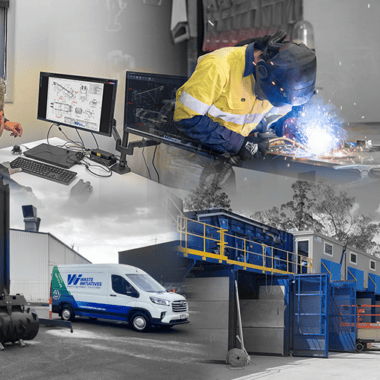
For many businesses, investing in waste equipment is a logical step toward improving efficiency, reducing costs, and gaining control over waste streams.
In most cases, the preferred outcome is clear.
Own the right equipment, properly funded, as part of your operation.
However, the pathway to ownership is not always straightforward. Capital constraints, timing, or internal approval processes can delay decisions, even when the operational need is clear.
This is where rental and finance options play an important role.
Not as a replacement for ownership, but as practical pathways to get there.
Ownership Remains the End Goal
For established waste processors and businesses, securing equipment through standard finance or capital investment is typically the most effective long-term approach.
Ownership provides:
- Full control over the asset
- Long-term cost efficiency
- Alignment with operational growth
- Integration into broader system design
This is especially true for:
- large-scale processing systems
- capital-intensive infrastructure
- long-term facility upgrades
In these cases, equipment is part of a broader engineered solution and is best treated as such.
Where Rental and Finance Options Fit
There are situations where an alternative approach makes sense.
Rental and structured finance options can provide a bridge between immediate need and long-term ownership, particularly for smaller solutions.
These options allow businesses to:
- implement equipment sooner
- spread costs over time
- validate operational benefits before full ownership
Rather than delaying a decision, they provide a way to move forward.
Solving the Timing Challenge
One of the most common barriers to equipment investment is timing.
The need is immediate, but:
- capital budgets may be locked in
- approval processes may take time
- competing priorities may delay decisions
In the meantime, waste costs continue.
Rental and finance options help address this gap by allowing businesses to:
- act when the need arises
- begin improving operations immediately
- transition toward ownership over time
A Practical Step, Not a Compromise
It is important to position these options correctly.
Rental and finance are not about settling for a lesser solution.
They are about enabling the right solution, at the right time.
In many cases, this means:
- starting with a vertical baler to reduce costs
- improving waste handling on-site
- building a solid case for waste management and future investment options
This approach supports a more structured transition toward larger, long-term solutions.
Understanding Whether It Makes Sense
The key question is not just how to fund equipment, but whether it will deliver value.
Before committing to any pathway, it is important to understand:
- current waste costs
- potential savings
- operational impact
This is where having clear, simple tools to assess ROI becomes critical.
Start With the Numbers
If you are considering a vertical baler or similar equipment, the first step is understanding how it would perform in your operation.
Our Vertical Baler ROI Calculator is designed to give you a practical, data-driven starting point.
It takes a few key inputs, including:
- Your current bin size and number of bins
- Collection frequency
- Weekly collection costs
- Available space and power
From this, it calculates:
- Your annual waste collection cost
- The most suitable baler options for your operation
- Estimated repayment ranges under finance options
- A clear indication of potential return on investment
Instead of guessing, you can quickly see:
- How much you are currently spending
- How equipment could reduce those costs
- How long it may take to pay back
For many businesses, this is the turning point.
What was previously an uncertain decision changes to a clear, data-backed opportunity.
Moving Toward Ownership
Whether through direct purchase, finance, or structured rental, the objective remains the same.
Implement the right equipment and build long-term value into your operation.
Rental and finance options simply provide additional flexibility in how you get there.
From the initial first step you can then determine the most appropriate path forward, whether that is:
- direct purchase
- structured finance
- or a staged approach toward ownership
The key is not delaying the decision. It is making the right one, at the right time.
Want to know if rental or finance is the right fit for your operation? Speak to a Waste Initiatives solutions specialist today. We’ll help you assess your waste stream, understand your options, and map out the most practical path to ownership.
Latest news
What Did Your Waste Operation Tell You This Year?
79 Million Tonnes of Waste: What Australia’s Latest Data Reveals