Australia’s transition to Net Zero is no longer theoretical. For sectors that rely on high-temperature heat, continuous energy demand and hard-to-electrify processes, renewable electricity alone is not enough.
In the 2022–23 financial year, Australia generated 14.6 million tonnes of organic waste. Importantly, over 60% of that material was recovered for composting, fertiliser production and energy generation, according to Australia’s Circular Economy Inquiry Report released in August 2025.
Biogas is emerging as a critical pillar of the national decarbonisation strategy. However, biogas plants are only as effective as the feedstock that enters the digester.
For facilities processing FOGO (Food Organics and Garden Organics), contamination from packaging is the single greatest threat to performance, digestate quality and long-term viability. This is where advanced depackaging technology from Mavitec plays a transformative role.
If Australia is serious about scaling biogas, clean feedstock and the technologies that enable high purity rates are essential starting points.
What Is Biogas and Why Does It Matter?
Biogas is produced through anaerobic digestion, the breakdown of organic matter by bacteria in the absence of oxygen. Inside an airtight reactor maintained at approximately 30–40°C, microorganisms convert food waste, manure, crop residues and organic by-products into:
- Methane (CH₄)
- Carbon dioxide (CO₂)
The methane-rich gas can be used to:
- Generate electricity and heat via Combined Heat and Power (CHP) units
- Replace fossil natural gas in industrial processes
- Be upgraded to biomethane (approximately 98% methane) for grid injection
- Serve as a renewable transport fuel
Just as importantly, the process produces digestate, a nutrient-rich organic fertiliser that can replace synthetic mineral fertilisers.
This creates a true circular system:
Waste becomes energy.
Residue becomes fertiliser.
Carbon is recycled rather than emitted.
In the context of Australia’s Net Zero commitments, this capability moves from environmental benefit to strategic necessity.
While Australia’s biogas industry remains smaller than global leaders such as Germany, its long-term potential is substantial. Foundational research cited in national policy work continues to support projections that biogas could supply more than 6% of Australia’s total energy demand by 2050.
Biogas and Australia’s Net Zero Ambition
Biogas is identified as a critical pathway within Australia’s Net Zero 2050 strategy, particularly for hard-to-abate industrial sectors such as:
- Alumina calcination
- Chemical manufacturing
- Food processing
- Industrial heat applications
Unlike solar or wind, biogas provides:
- Dispatchable energy
- High-temperature heat
- Decentralised generation
- Regional economic development
Australia currently operates roughly 250 anaerobic digestion plants. Despite this, biogas accounts for only around 0.5% of national energy production.
The opportunity is significant and scaling depends on one critical variable: feedstock quality.
And feedstock quality is determined well before material reaches the digester.
Why Clean Feedstock Changes Plant Economics
Biogas projects already face structural pressures in Australia, including:
- High capital expenditure
- Competition with historically cheap natural gas
- Regulatory inconsistencies across jurisdictions
- Complex planning and environmental approvals
Contamination makes these economics worse, but high-purity organic feedstock enables:
- Predictable gas production
- Higher methane concentration
- Reduced operational risk
- Improved digestate reuse potential
- Stronger environmental performance
When digestate is clean, it is far easier to meet “end of waste” criteria and support regulatory reform efforts aimed at reclassifying digestate as a beneficial product rather than priority waste.
Feedstock purity supports not only technical performance, but regulatory acceptance and long-term investment confidence.
Policy Reform Has Strengthened the Investment Case
One of the most significant developments in the 2025 Inquiry Report is the reform of carbon reporting frameworks.
Previously, facilities could only claim avoided emissions under NGER and the Safeguard Mechanism if renewable gas was produced onsite. This created a disincentive for purchasing biomethane via shared gas infrastructure.
That barrier has now been addressed.
The National Greenhouse and Energy Reporting (Measurement) Amendment (2025 Update) Determination 2025 allows renewable gas certificates to be used as evidence of abated emissions.
With renewable gas certificates now recognised under NGER, the regulatory environment is moving in the right direction.
This change materially improves:
- Bankability of biomethane projects
- Corporate decarbonisation pathways
- Demand certainty for renewable gas
- Investor confidence
Biogas is no longer constrained by structural reporting gaps. The foundations for growth are strengthening.
Beyond Energy: The Circular Economy Impact
Australia has committed to doubling circularity by 2035.
Biogas supports this goal by:
- Diverting organics from landfill
- Reducing methane emissions
- Producing renewable energy
- Creating bio-based fertilisers
- Supporting regional employment
But contamination undermines circular systems.
Plastic fragments in digestate erode public confidence.
Chemical residues complicate agricultural reuse.
Operational failures deter investment.
The solution begins at the very front of the process.
Depackaging Becomes Foundational
Modern biogas plants include:
- Receiving and mixing areas
- Airtight digesters
- Gas storage
- CHP systems
- Digestate storage
- Gas upgrading systems
But none of this downstream infrastructure can compensate for contaminated feedstock.
Depackaging is not an optional add-on. It is risk mitigation.
It protects biological stability, mechanical reliability and regulatory compliance, before those risks escalate.
The Role of Mavitec Depackaging Technology
Mavitec systems are engineered specifically to separate organic material from packaging with exceptional precision.
The process:
- Effectively opens packaged food waste
- Separates plastics and contaminants
- Produces a pumpable organic fraction
- Delivers up to 99.7% clean output, depending on feedstock
The result is a homogenous “organic soup” ideally suited for anaerobic digestion.
This high-purity fraction:
- Improves biogas yield
- Protects mechanical equipment
- Enhances digester stability
- Improves digestate quality
- Reduces regulatory risk
Instead of shredding and screening mixed waste, Mavitec systems focus on controlled extraction at the source.
Organic value is captured.
Contaminants are isolated.
Digestate remains market-ready.
In Australia’s next phase of biogas expansion, operational certainty will separate viable projects from stalled ones.
Clean separation is not just operational detail. It is the competitive advantage.
Below is a case study by Mavitec as a key solutions partner to a biogas facility in Romania.
If you are developing or upgrading a biogas facility and want to maximise feedstock purity, improve gas yields and protect long-term asset performance, speak with our team about advanced depackaging solutions. Clean separation is the foundation of scalable biogas production in Australia’s circular future.
Latest news
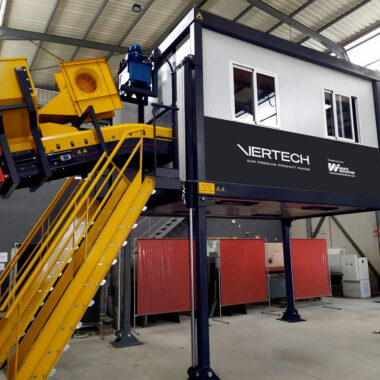
Manual Sorting, Maximum Recovery: The Role of Mobile Picking Stations
Australia’s Waste Challenge by State