Waste sorting equipment that performs well in a temperate European climate does not always translate to Australian conditions. The blistering heat of the Pilbara, the humidity of Far North Queensland, and the dust-heavy environments of inland processing sites create operational pressures that expose weaknesses in lightly adapted imported systems.
For councils, waste contractors and recyclers, this environmental mismatch leads to frequent breakdowns, inconsistent recovery rates and difficult working conditions that make labour retention increasingly challenging.
As recovery targets tighten and labour shortages persist nationwide, the design of the sorting environment has become a strategic operational factor rather than a secondary consideration.
The launch of the Vertech Mobile Picking Station represents a deliberate response to these realities, engineered with Australian conditions, workforce pressures and long-term serviceability at the forefront.
Built Specifically for Australian Conditions
Australia’s waste sector operates across extremes:
- High ambient temperatures
- Remote and regional processing locations
- Dust-heavy environments
- Variable waste stream composition
- Limited access to specialised technicians
Many imported systems are designed around optimised production processes rather than export-market operating conditions. That distinction matters in real-world performance.
The Vertech range has been developed with direct engineering input to ensure durability, robustness and suitability for Australian processing sites. Reliability and operator productivity were prioritised from the outset, rather than being secondary considerations.
This approach reflects a broader evolution, moving beyond equipment distribution toward ownership of the design philosophy itself.
Labour Retention Starts with the Work Environment
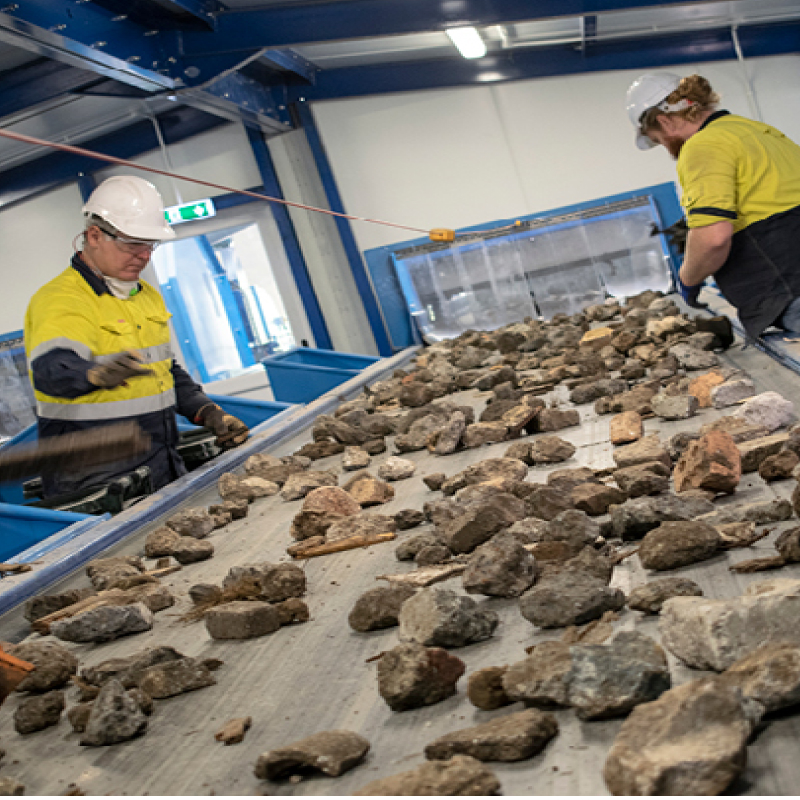
Australia’s waste and recycling sector continues to face significant labour challenges. Sorting roles are physically demanding and often performed in uncomfortable conditions.
When operators are exposed to excessive heat, poor lighting and dust infiltration, the consequences are measurable:
- Reduced picking speed
- Lower material purity
- Increased fatigue
- Higher turnover
- Greater training costs
The Vertech Picking Station addresses these challenges by transforming the picking environment into a controlled, sustainable workspace.
Each unit incorporates:
- Fully enclosed, climate-controlled cabins
- High-quality internal lighting
- Elevated, secure platforms
- Safety-focused flooring and access systems
When operators feel safe and comfortable, productivity improves. Throughput increases. Contamination decreases.
Manual sorting does not need to mean manual hardship.
Purity and Throughput Gains
Automation remains essential in modern processing lines, but manual picking continues to play a critical quality-control role, particularly in mixed C&D, C&I and FOGO streams.
The Vertech system integrates adjustable belt speeds, magnetic separation and air-blower systems that allow operators to fine-tune performance based on material profile.
This flexibility enables facilities to:
- Recover multiple material streams in a single pass
- Improve commodity purity
- Reduce residual volumes
- Capture items missed by automated systems
- Adapt to seasonal or contract-based waste variations
Field performance comparisons show measurable improvements in purity when sorting is conducted within a controlled cabin environment versus manual floor sorting.
For contractors operating under council performance contracts, even incremental purity improvements can significantly impact landfill levies, commodity revenue and KPI compliance.
For councils financing infrastructure, purity translates into better diversion reporting and stronger environmental outcomes.
Serviceability in Remote and Regional Australia
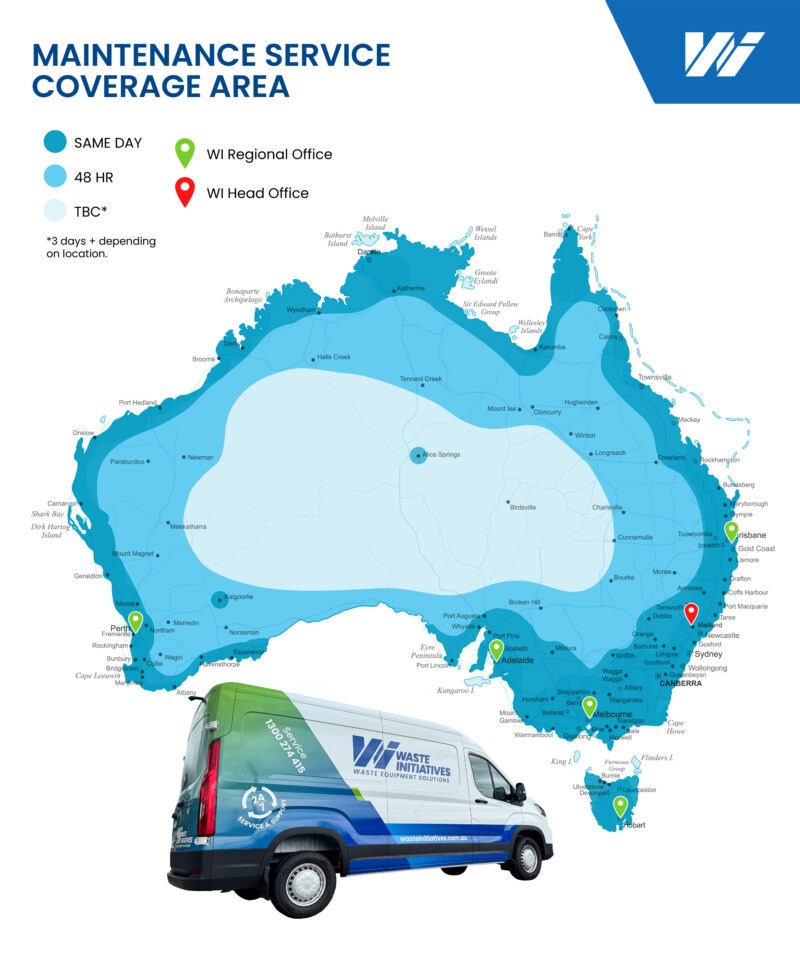
Robust engineering is only part of the equation. Serviceability across Australia’s vast geography is equally important.
To address this, Vertech units incorporate widely supported power systems and components that can be serviced throughout metropolitan, regional and remote Australia. Access to spare parts and qualified technicians remains achievable even in mining regions or isolated council yards.
Downtime in remote areas can quickly erode contract performance. Equipment that can be maintained locally reduces operational risk.
This emphasis on practical service support reflects an understanding of how waste facilities actually operate, not just how they appear on a specification sheet.
Modular Configurations for Operational Flexibility
The Vertech Picking Station range is available in multiple configurations to suit varying site requirements:
- Two-bay layouts accommodating up to four operators
- Three-bay layouts supporting up to six operators
- Mobile and 5th-wheel transportable formats
- Tracked mobile options for rapid site relocation
Adjustable magnets, blowers and belt speeds allow operators to process:
- Construction and demolition waste
- Commercial and industrial waste
- Garden organics
- FOGO contamination streams
- Mixed municipal loads
The mobility of the system is particularly valuable for:
- Regional councils managing multiple waste streams
- Contractors servicing several municipal contracts
- Sites requiring temporary deployment
- Operators transitioning toward staged automation
A mobile picking station can process FOGO contamination in one area of a facility and later be repositioned for C&D waste recovery. This flexibility reduces the need for multiple static installations.
For councils, this means infrastructure that adapts as waste strategies evolve.
Download our range brochure:
A Strategic Step Toward Scalable Sorting
For smaller operators and regional councils, full-scale automated MRF redevelopment is often cost-prohibitive. A mobile picking station provides a scalable entry point that delivers immediate recovery improvements while preserving long-term upgrade pathways.
It can function as:
- A standalone recovery platform
- A pre-sort stage before automated separation
- A contamination control unit
- A temporary processing solution during facility upgrades
Rather than locking facilities into rigid layouts, Vertech systems are designed as adaptable assets within broader sorting strategies.
Supporting the Transition to Complete Sorting Systems
Vertech Mobile Picking Stations are part of a broader sorting systems strategy.
As facilities expand, picking stations can integrate with:
- Trommel screening
- Scalping screeners
- Air separation systems
- Magnetic recovery
- Additional mechanical separation technologies
This staged growth model allows contractors and councils to progressively enhance recovery capability without immediate large-scale capital redevelopment.
The objective is clear: build foundations that support long-term performance.
The Future of Sorting Is Australian-Focused
Recovery targets will continue to rise. Contamination thresholds will tighten. Councils will demand measurable performance improvements from contractors.
Facilities that invest in adaptable, climate-suited and serviceable infrastructure will be positioned to meet those expectations.
The Vertech Mobile Picking Station range has been developed specifically for this environment, not as a lightly modified import, but as a system aligned to Australian operational realities.
For contractors seeking improved recovery and contract resilience, and for councils financing the infrastructure that underpins diversion outcomes, picking station design now plays a central role in performance.
Sorting success is no longer about simply separating materials.
It is about building systems that work where Australia actually operates.
Contact Waste Initiatives to discuss how our picking station and sorting system solutions can help you improve recovery, reduce contamination and future-proof your waste operations.
Latest news
What Did Your Waste Operation Tell You This Year?
79 Million Tonnes of Waste: What Australia’s Latest Data Reveals