Managing wood waste efficiently can be a significant challenge for manufacturers, warehouses, recycling facilities, timber processors and construction operations.
While wood is often viewed as a recyclable resource, bulky timber waste streams can quickly consume valuable space, increase transport costs and create unnecessary handling requirements. Pallets, timber crates, cable drums, packaging timber and production offcuts all contain a large amount of trapped air, making them expensive to store and transport in their unprocessed form.
For organisations looking to reduce waste disposal costs and improve operational efficiency, two compaction technologies are commonly considered: roll packers and auger compactors.
This roll packer vs auger compactor comparison examines how each technology performs when processing wood waste, including compaction performance, labour requirements, maintenance costs and total cost of ownership.
While both systems are designed to reduce waste volume, they achieve this in very different ways and are suited to different waste streams.
When it comes to bulky wood waste, the differences become particularly important.
The Challenge Of Wood Waste Management
Unlike cardboard or general waste, wood waste presents unique handling challenges.
Many timber waste streams are:
- Bulky and irregularly shaped
- Difficult to stack efficiently
- Expensive to transport due to low density
- Generated in large volumes
- Contaminated with nails, screws or metal fittings
As a result, businesses often find themselves paying to transport air rather than paying to transport waste.
This is where compaction equipment can dramatically improve operational efficiency.
What is a Roll Packer?
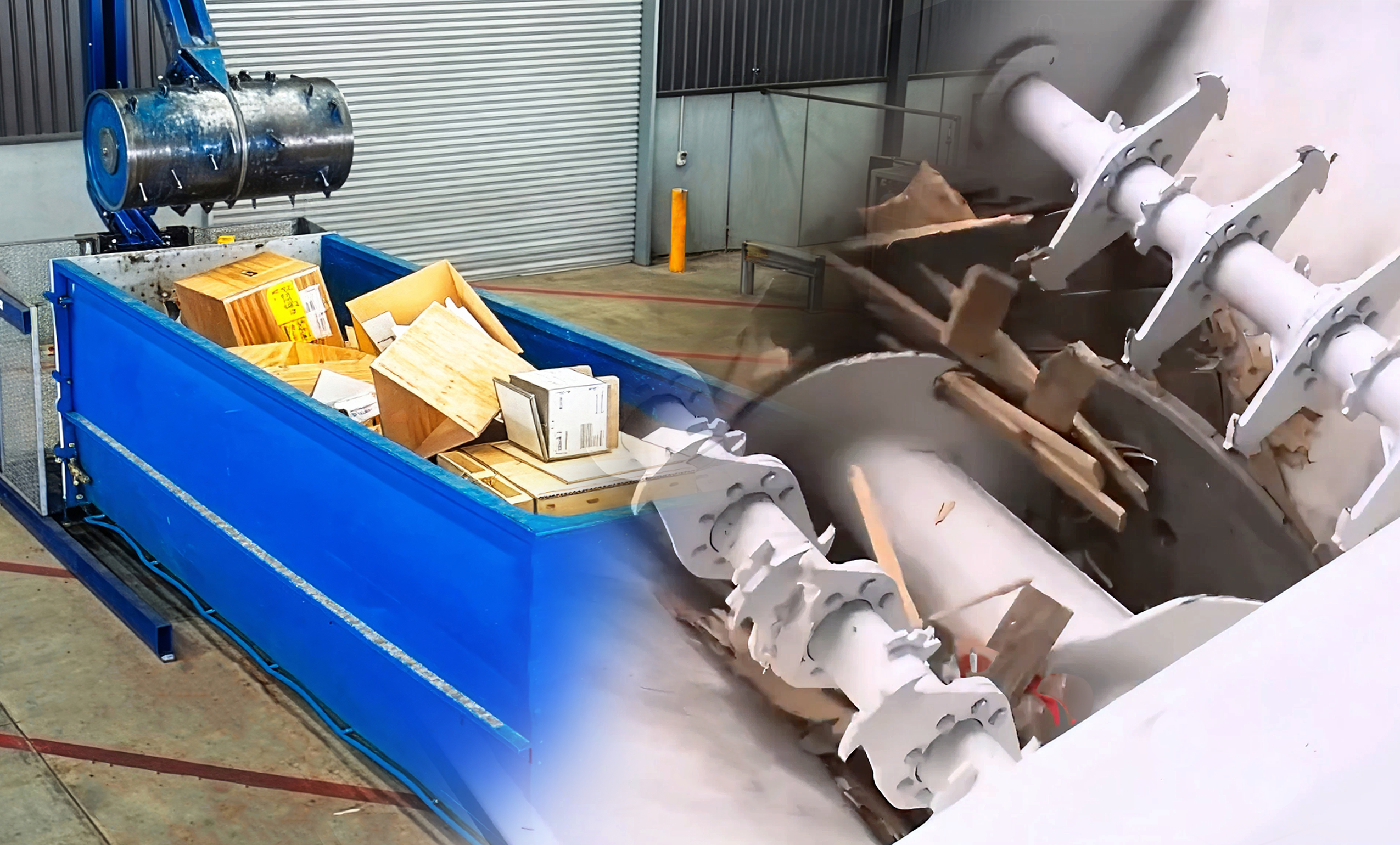
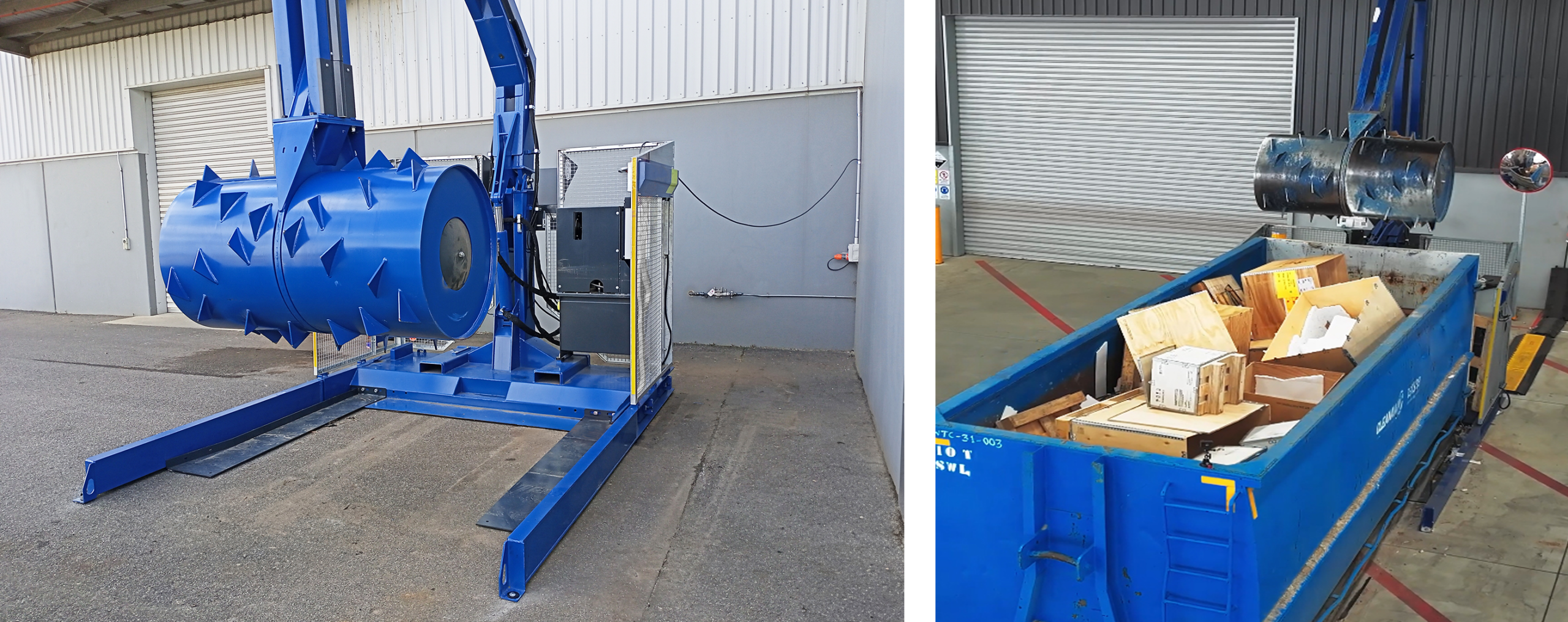
A roll packer uses a heavy steel drum fitted with specially designed compaction teeth to crush and compact waste inside an open-top container.
As material is loaded into the container, the drum continuously travels across the waste stream, breaking down bulky items and compacting them into a much denser load.
Roll packers were originally developed for difficult bulky waste streams and have become particularly popular in:
- Timber processing facilities
- Manufacturing plants
- Warehousing and logistics operations
- Waste transfer stations
- Recycling facilities
- Construction and demolition operations
Because material can be loaded directly into the container using a forklift or loader, roll packers are highly effective when handling large timber items.
What is an Auger Compactor?
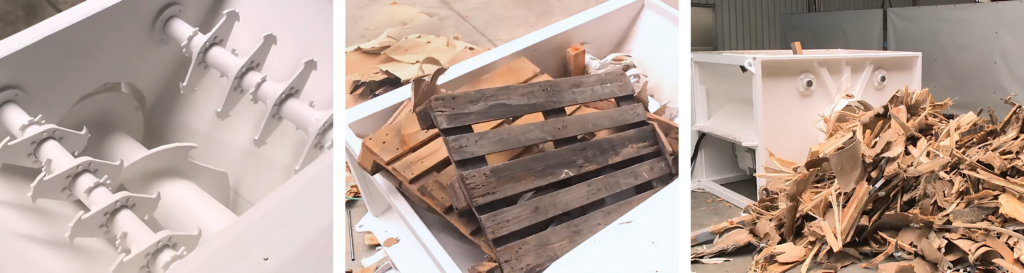
An auger compactor uses a large rotating screw to move and compact material into a receiving container.
As waste enters the hopper, the auger pulls the material into the compaction chamber where it is compressed before being pushed into the container.
Auger compactors are commonly used in applications involving:
- Food waste
- Organic waste
- Wet waste streams
- Plastic film
- Soft packaging materials
- Commercial waste
While they are effective for many waste streams, their performance can vary significantly when handling bulky timber products.
Which System Handles Wood Waste Better?
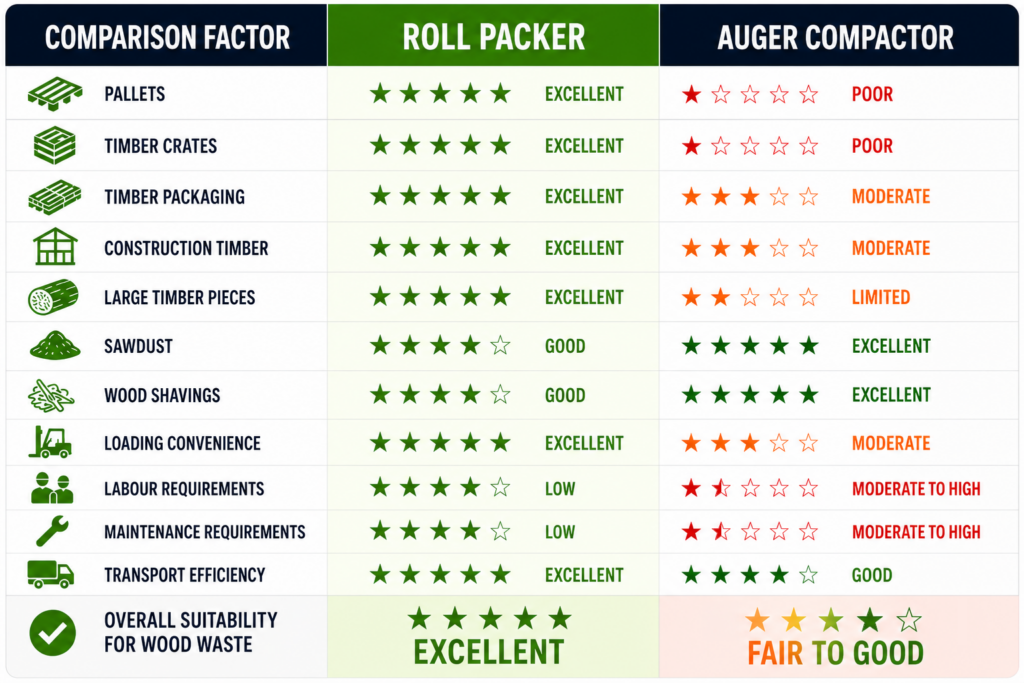
For bulky wood waste, a roll packer is generally the stronger solution.
The reason is simple.
Wood waste often consists of large, irregular materials that do not feed easily through enclosed hopper systems.
Pallets, crates and long timber offcuts can create feeding restrictions, require manual breakdown and increase wear on compaction components.
A roll packer eliminates many of these challenges by allowing operators to load material directly into the container where it is crushed and compacted by the drum.
When evaluating a roll packer vs auger compactor for wood waste, operators are typically focused on reducing labour, increasing payload weights and lowering transport costs.
For most timber waste streams, this results in:
- Faster loading
- Less manual handling
- Lower maintenance requirements
- Higher payload weights
- Lower transport costs
Roll Packer VS Auger Compactor for Wood Waste: A Comparison Table
Compaction Ratio Comparison
One of the biggest factors influencing waste transport costs in any roll packer vs auger compactor evaluation is the compaction ratio achieved by the equipment.
A higher compaction ratio means more material can be loaded into each container, reducing collection frequency and transport costs.
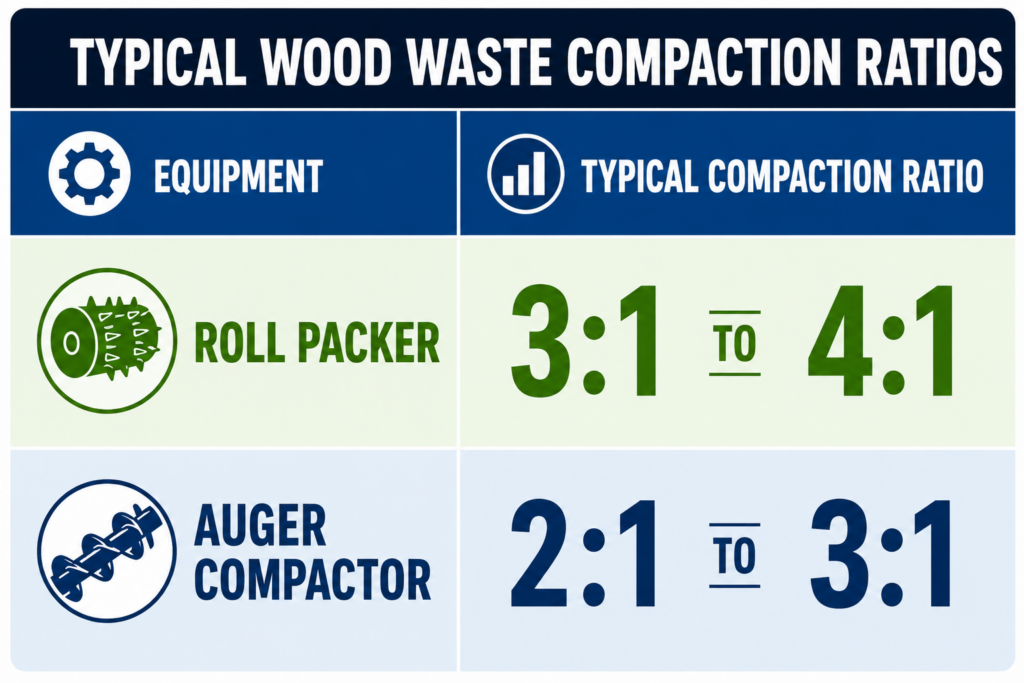
While actual results vary depending on the waste stream, roll packers often achieve significantly greater density when processing bulky timber products because they physically crush and break down the material.
Labour Cost Comparison
Labour is often one of the most overlooked costs when evaluating waste equipment.
In a roll packer vs auger compactor comparison, labour requirements can have a significant impact on annual operating costs, particularly where timber waste requires manual handling or size reduction before loading.
Consider a facility generating approximately 30m³ of timber waste per week.
Roll Packer
Waste is loaded directly into the container using a forklift.
Estimated operator involvement:
- 15 minutes per day
- 1.25 hours per week
Annual labour cost at $45 per hour: $2,925 per year
Auger Compactor
Timber often requires breakdown before loading.
Estimated operator involvement:
- Breaking down pallets and timber
- Feeding and monitoring hopper operation
- Managing oversized material
Total estimated labour:
- 5.4 hours per week
Annual labour cost at $45 per hour: $12,636 per year
Labour Saving
In this example, a roll packer could reduce labour costs by approximately: $9,711 per year
Maintenance Cost Comparison
Maintenance requirements also differ considerably between the two systems.
When assessing a roll packer vs auger compactor for timber waste, maintenance costs should be evaluated alongside labour, transport savings and equipment lifespan.
Roll Packer
Typical maintenance includes:
- Drum inspection
- Tooth inspection
- Bearing maintenance
- Routine servicing
Estimated annual maintenance cost: $2,940 per year
Auger Compactor
Typical maintenance includes:
- Auger flight wear
- Wear liner replacement
- Bearing maintenance
- Hopper maintenance
- Clearing blockages
Estimated annual maintenance cost: $8,880 per year
Maintenance Saving
In this example, a roll packer could reduce maintenance expenditure by approximately: $5,940 per year
Total Cost Of Ownership Comparison
When evaluating equipment, purchase price is only one component of the investment decision.
The real measure of value is total cost of ownership.
A comprehensive roll packer vs auger compactor assessment should consider:
- Labour costs
- Maintenance costs
- Energy consumption
- Transport costs
- Downtime risk
- Equipment lifespan
Using the previous example:
| Annual Cost Category | Roll Packer | Auger Compactor |
|---|---|---|
| Labour | $2,925 | $12,636 |
| Maintenance | $2,940 | $8,880 |
| Total Annual Operating Cost | $5,865 | $21,516 |
Before considering transport savings, the roll packer delivers an annual operating cost advantage of approximately: $15,651 per year
When An Auger Compactor May Be The Better Choice
Although roll packers are generally preferred for bulky timber waste, there are applications where an auger compactor may be more suitable.
These include:
- Sawdust
- Wood shavings
- Small production offcuts
- Fine wood processing residues
- Dust extraction systems
In these situations, the auger’s enclosed design and continuous feeding capability can provide excellent performance.
Which Solution Should You Choose?
If your operation generates pallets, timber crates, packaging timber, cable drums or bulky construction timber, a roll packer will typically provide the strongest business case.
The combination of higher compaction ratios, reduced labour requirements, lower maintenance costs and improved transport efficiency often results in a substantially lower total cost of ownership over the life of the equipment.
For facilities handling fine wood residues such as sawdust and shavings, an auger compactor may be the better solution.
Ultimately, the outcome of any roll packer vs auger compactor comparison depends on the characteristics of the waste stream being processed. For most bulky timber waste applications, however, roll packers generally deliver superior compaction performance and lower operating costs.
The key is understanding the characteristics of the waste stream before selecting the equipment.
Speak With Waste Initiatives
Choosing the right compaction equipment starts with understanding your waste stream.
Waste Initiatives supplies both roll packer and auger compactor solutions and can help determine the most suitable system for your operation. View our compactors here.
Contact our team to discuss your wood waste application and identify the best solution for reducing waste transport costs and improving operational efficiency.
Frequently Asked Questions
Can a roll packer compact wooden pallets?
Yes. Roll packers are particularly effective at compacting wooden pallets, timber crates and bulky timber packaging.
Which compactor achieves the best results for timber waste?
For most bulky timber waste streams, roll packers achieve higher compaction ratios and lower operating costs than auger compactors.
Do auger compactors work with wood waste?
Yes. However, they are generally better suited to fine wood waste streams such as sawdust, wood shavings and small offcuts.
Which solution requires less maintenance?
In most timber waste applications, roll packers require less maintenance due to their simpler design and lower exposure to wear components.
Which solution has the lowest total cost of ownership?
For bulky wood waste streams, roll packers typically provide the lowest total cost of ownership through reduced labour, maintenance and transport costs.
Is a roll packer better than an auger compactor for wood waste?
For most bulky wood waste streams, including pallets, timber crates and construction timber, roll packers typically provide higher compaction ratios, lower labour requirements and reduced operating costs.
Which compactor achieves the highest density for timber waste?
Roll packers generally achieve higher density levels when processing bulky timber products, often delivering compaction ratios between 4:1 and 8:1 depending on the material.
What is the best compactor for pallet waste?
For wooden pallets and timber packaging, roll packers are often considered the preferred solution due to their ability to handle large bulky items without extensive manual breakdown.
Which system has lower operating costs?
For most timber waste applications, roll packers typically deliver lower annual operating costs through reduced labour, lower maintenance requirements and improved transport efficiency.
Latest news
What Did Your Waste Operation Tell You This Year?
79 Million Tonnes of Waste: What Australia’s Latest Data Reveals