Starting a recycling business in Australia has never been more relevant, or more promising. Even though our country has vast expanses, we do not want to see more waste going to landfill. With stronger sustainability targets being developed along with increasing consumer demand for greener solutions, the recycling sector is a rapidly expanding opportunity for entrepreneurs.
Whether you want to process plastics, paper, metals, e-waste, or organics, the steps to building a successful recycling business involves careful planning, compliance, the right equipment, and a strong understanding of market trends. This updated 2025 guide brings you the latest insights to help you get started.
Understand the 2025 Recycling Landscape in Australia
The Australian recycling landscape in 2025 is characterized by ongoing efforts to maximise resource recovery and a transition towards a circular economy for materials. Key drivers in 2025 include:
National Waste Policy Action Plan
Set by the 2018 National Waste Policy, the action plan establishes a path for Australia’s waste management toward 2030 and beyond. This comprehensive plan sets primary objectives to achieve an 80% average resource recovery rate, reduce total waste generated by 10% per person, and halve the amount of organic waste sent to landfill by 2030. The plan also aims to guide investment and support policy reform to better manage Australia’s waste challenge. The tools that can be used to achieve these goals are either product stewardship schemes or export bans.
Product Stewardship Example
Container Deposit Schemes (CDS), also known as a Container Refund Scheme (CRS) or Deposit Return Scheme (DRS), is a form of product stewardship legislation where the beverage industry assumes responsibility for the recovery and recycling of empty beverage containers. According to the Australian Beverages Council Ltd (ABCL), the primary mission of the CDS is to serve as an environmental management strategy to reduce the number of beverage containers entering the environment or landfill, increase recycling rates, and create a clean waste stream to drive a circular economy.
Export Bans
Waste export regulations are regularly posted and updated on the Department of Climate Change, Energy, the Environment and Water (DCCEEW) website. The regulation of waste exports in Australia stems from the 2019 decision by the former Council of Australian Governments (COAG) to establish a timetable to ban the export of waste plastic, paper, glass, and tyres. The regulations are implemented through a licensing and declaration scheme under the Recycling and Waste Reduction Act 2020. The implementation of the export regulations was staged for different material types:
- Waste glass was regulated first, with the ban commencing in January 2021. This requires glass to be processed into forms like furnace-ready or non-furnace-ready cullet or fines before export. Exports subsequently fell significantly (from 3% of recovered glass to 0.1% by 2022–23).
- Mixed plastics exports were regulated from July 2021, requiring these materials to be sorted into a single resin or polymer type or processed into processed engineered fuel before they could be exported.
- Single resin or polymer plastics were regulated from July 2022, requiring these materials to be sorted into a single resin type and then further processed, by being flaked or pelletised, or alternatively converted into processed engineered fuel before export.
- All whole used tyres, including baled tyres, were banned from export starting December 2021. Tyres can only be exported if processed into shredded tyre-derived fuels meeting a specification, or as whole tyres for reuse or retreading.
- Mixed and unsorted paper and cardboard became subject to the regulation beginning 1 July 2024, with licensing mandatory from 1 October 2024. However, “clean streams” of paper alone or cardboard alone are not regulated.
Under this framework, regulated materials may only be exported if they have been processed into a value-added material that can be reused or remanufactured overseas. Exporters are required to hold a specific waste export licence and declare each consignment to the DCCEEW and the Australian Border Force.
Understanding where your business fits within these regulations and what the requirements are to gain a waste export license will help you select the right waste stream as you build your business case to start a recycling business.
Choosing Your Recycling Niche
Successful recycling businesses often specialise in a specific material stream. Common options and sources include:
Paper & Cardboard Recycling
The largest source is Commercial and Industrial (C&I) followed by Municipal Solid Waste (MSW). The total quantity of paper and cardboard waste generated is falling. This decline is primarily linked to the digitisation of information, resulting in decreased consumption of newsprint, magazines, and printing and writing papers, despite strong growth in packaging papers like cardboard.
Plastics Recycling
The largest source is Commercial and Industrial (C&I) followed by Municipal Solid Waste (MSW). Plastics have the lowest resource recovery rate among major waste categories, standing at only 12.5% in 2022-23, meaning landfills received an estimated 87.5% of plastics waste.
Metal Recycling
Copper, aluminium, and steel have strong resale value. The largest source is Commercial and Industrial (C&I), Construction and Demolition (C&D) and Municipal Solid Waste (MSW). Metals are noted for having the highest resource recovery rate among major waste categories, reaching 90% in 2022-23. Metal recycling is sensitive to global prices, which tend to be relatively strong. An estimated 43% of recovered metals were exported for recycling in 2022-23.
Glass Recycling
The largest source of glass waste is Municipal Solid Waste (MSW) followed by Commercial and Industrial (C&I). While MSW is the main source of generated glass waste, the widespread introduction of Container Deposit Schemes (CDS) across Australia has begun shifting the recovery pathway for beverage containers (which include glass) away from traditional kerbside recycling bins.
E-waste Recycling
Electronic and electrical waste (e-waste) is predominantly generated by households and small businesses, and it is primarily managed through specific product stewardship schemes. Modelling estimates that roughly 54% of all e-waste generated in 2020-21 was sent for recycling processes, recovering about 35% of the material inputs. Despite this, hazardous metals (like cadmium and cobalt) and precious metals (like gold and palladium) from e-waste are often landfilled when contained within composite material products.
Organic Waste Recycling
The largest source of material designated as Food Organics and Garden Organics (FOGO) is Municipal Solid Waste (MSW), which primarily originates from households. FOGO systems are crucial because when implemented effectively and promoted well, they can divert 70% or more of the food waste generated in the local government area away from landfill. Recovery rates for MSW have climbed strongly in recent years, largely attributed to increased organics recycling.
Tyre Recycling
Shredding and processing end-of-life tyres for crumb rubber or fuel. Tyres are typically included in the ‘hazardous waste’ category due primarily to fire risks. Since 2014, the Tyre Stewardship Scheme, managed by Tyre Stewardship Australia (TSA), has been operating voluntarily, financially supported by various tyre and automotive brands, aiming to manage end-of-life tyres. Australia still has a long way to go to fully resolve its tyre waste challenge.
Narrowing your focus makes it easier to target waste sources, source equipment, and comply with material-specific regulations.
Create a Strong Recycling Business Plan
A standard waste recycling business plan should at least cover:
- Market analysis – Waste sources, processed waste demand, competitors, and industry trends. It is vital to stay on top of legislation and long-term plans. A single change in legislation can undo your business plan in a single decision if you are on track to start recycling a waste stream that is about to see changes in regulation that will negatively impact on your plan.
- Compliance Requirements – This is a non-negotiable that should be considered early on in your plan, which includes EPA Licensing, WHS Regulations, Product Stewardship Schemes, Export Permits and Local Development Approvals.
- Operational plan – Complete end-to-end waste processing facility layout and capacity, logistics to move waste to and from the recycling facility and staffing requirements.
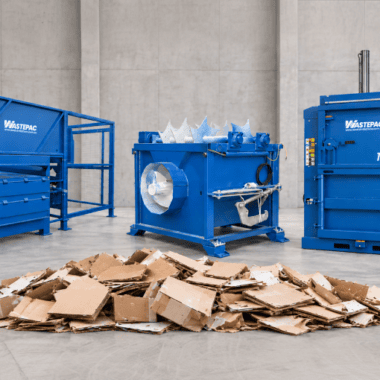
- Equipment requirements – No matter the solution you choose, a solid understanding from a valued partner on the benefits of shredders, balers, sorting lines, conveyors and compactors will go a long way into helping you setup the right solution for your waste problem. Make sure to consider a partner who offers sales service and locally stocked parts.
- Financial forecasts – A financial forecast will make it clear if the solution will be viable. Consider your startup costs, external funding and grants, potential income from processed waste sales, running costs, break-even projections.
- Risk management – Compliance, market price fluctuations, regulatory changes, operational safety, community and environmental impacts. Understanding your risks early will allow you to put mitigations strategies in place to ensure long term success.
This plan is critical for securing funding and guiding business decisions.
Securing Funding for Your Recycling Business in 2025
Starting a recycling facility can be capital-intensive, but several funding options are available in 2025:
- Government Grants & Rebates – Programs like the Recycling Modernisation Fund (RMF) and state waste infrastructure grants. The Australian Government is contributing over $200 million towards new and upgraded recycling infrastructure through the RMF.
- Low-Interest Loans – Clean Energy Finance Corporation (CEFC) and some state development banks offer finance for sustainable projects.
- Product Stewardship Schemes – it is likely that a stewardship scheme can assist in unlocking funding as they are established to ensure that the recycling of the particular waste stream is successful.
- Private Investment – from sustainability-focused investors and venture capital funds.
- Equipment Leasing – reduces upfront costs for machinery and allows scalability.
Keeping up to date with grant application deadlines is vital. Competition for funding will be high, and your success will be determined by how well the business case is presented and your ability to stand out from other requests.
Build a Sustainable Supply Chain
Material sourcing is the lifeblood of any recycling business. Options include:
- Direct contracts with waste producers – retailers, manufacturers, councils.
- Collection services – operating your own fleet or subcontracting to waste transport companies.
- Partnerships with waste management firms – to receive sorted recyclables.
Reliable inbound material supply ensures you can meet output commitments to buyers of recycled products.
Marketing Your Recycling Business
To stand out in 2025, your marketing plan should at least include:
- Establish an online presence – showcasing your business online and the contribution you make to recycling is important in legitimising your efforts to the outside world.
- Highlight compliance & sustainability credentials – ISO certifications, EPA licensing, stewardship programs and memberships are all key in establishing a network of like-minded professionals who will help you grow your business and stay on top of what is happening in the business and legislative environment.
- Leverage digital channels – SEO-optimised content (like this guide), social media, and online directories are the next steps in expanding your digital footprint.
- Showcase case studies – demonstrating cost savings, waste diversion, and environmental benefits will all come in handy when you need to access additional funding.
- Engage in industry events – expos, local council forums, and business sustainability workshops are exceptional networking tools that will enable and grow your business reputation and impact.
Getting Started
If you’re ready to take the next step, here’s your launch checklist:
- Research your target material and market demand.
- Understand your compliance requirements at national and state levels.
- Develop a comprehensive recycling business plan.
- Apply for appropriate licenses and approvals.
- Secure funding through grants, loans, or private investment.
- Source reliable, durable recycling equipment with service and after sales support.
- Establish inbound material supply agreements.
- Implement marketing strategies to attract clients.
The recycling industry in Australia is full of opportunity in 2025, but success requires strategic planning, compliance, and the right technology. Waste Initiatives is here to support your journey, from designing your facility layout to supplying industry-leading recycling equipment. Reach out to us below and we will be happy to discuss how we can assist.
Latest news
79 Million Tonnes of Waste: What Australia’s Latest Data Reveals
What Happens After You Order? Inside a Waste Initiatives Project