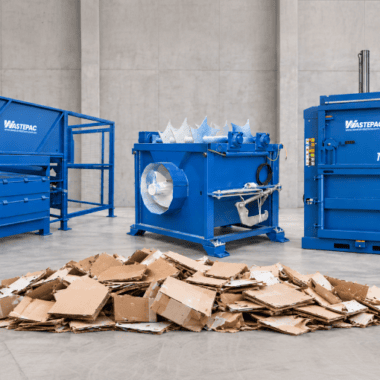
Before the last oversized boxes are cleared from the warehouse and the bins are emptied for the Christmas shutdown, which will be here before you can say Jack Robinson, take a closer look at what has accumulated. What remains on the floor can sometimes reveal where waste handling needs attention before another year begins.
Cardboard beside a full bin, crates awaiting dismantling or food waste waiting for a suitable collection pathway each raise a different question. Is there too much material for the current arrangement, or is something preventing it from moving through the operation?
This matters when planning for 2027.
Turn the clean-up into an operational review
End-of-year housekeeping offers a useful opportunity to examine the waste arrangements alongside the materials they are meant to handle.
Walk through production areas, warehouses, loading docks and waste storage areas before the clean-up begins. Record what has accumulated and ask the people handling it why it remains there.
- Is it difficult to load?
- Does it need cutting or flattening?
- Is the collection container full, or is there no agreed destination for the material?
Photographs, collection records, maintenance logs and staff feedback provide different parts of the picture. Together, they can help distinguish a one-off backlog from a recurring operating problem.
Pay particular attention to repeated handling. If staff move material from the production area to temporary storage, then move it again for preparation or collection, record each task. That gives the review a more useful starting point than simply describing the area as untidy.
Read the records alongside the workload
Collection frequency alone does not explain why a waste arrangement needs attention. Review it alongside container fill levels, material volumes, handling time and the activity generating the waste.
More cardboard could reflect increased deliveries. A change in plastic packaging could alter the material needing treatment. Check these changes against purchasing and production records to understand what is driving any additional waste or workload.
Likewise, separate equipment downtime into its causes where records allow. Breakdowns, blockages, unsuitable feed material and restrictions elsewhere in a processing line call for different responses.
The aim is to define the problem clearly enough to act on it:
- which material,
- at what volume,
- where it stalls and what happens next.
That becomes the basis for assessing both process changes and equipment options.
Cardboard: consider the box and the bale
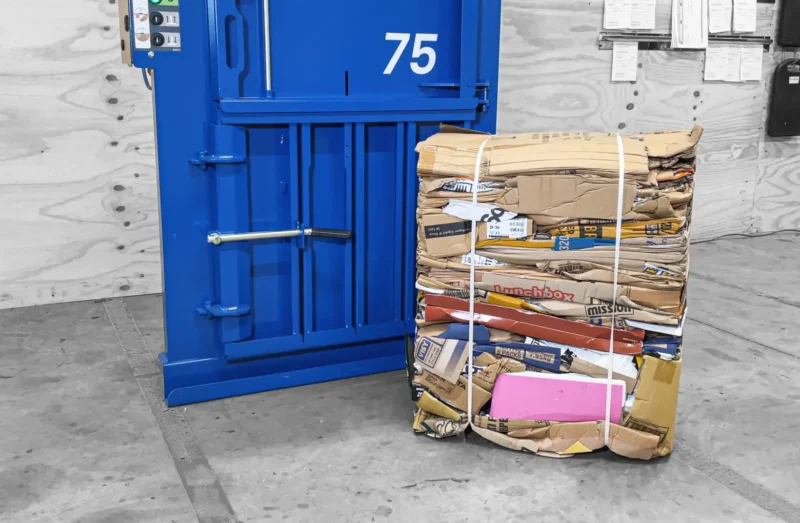
For a suitable cardboard stream, baling can consolidate loose packaging for storage and collection. Vertical balers and horizontal balers offer different approaches to feeding, processing and bale handling. The right arrangement depends on the material, workload and available space.
Volume is only part of the selection decision. Check the dimensions of the boxes entering the machine, the preparation required and how operators will feed them. Then consider the finished bale: its size, weight, storage location and handling requirements.
Confirm acceptance and collection arrangements with the receiving recycler before specifying the equipment. A bale needs an agreed destination, and the site needs a workable way to store and move it.
Oversized boxes deserve particular attention during the review. If staff routinely cut them down to fit existing equipment, include that preparation time in the assessment rather than considering only the machine’s processing capacity.
Crates and cores: reduce manual breakdown
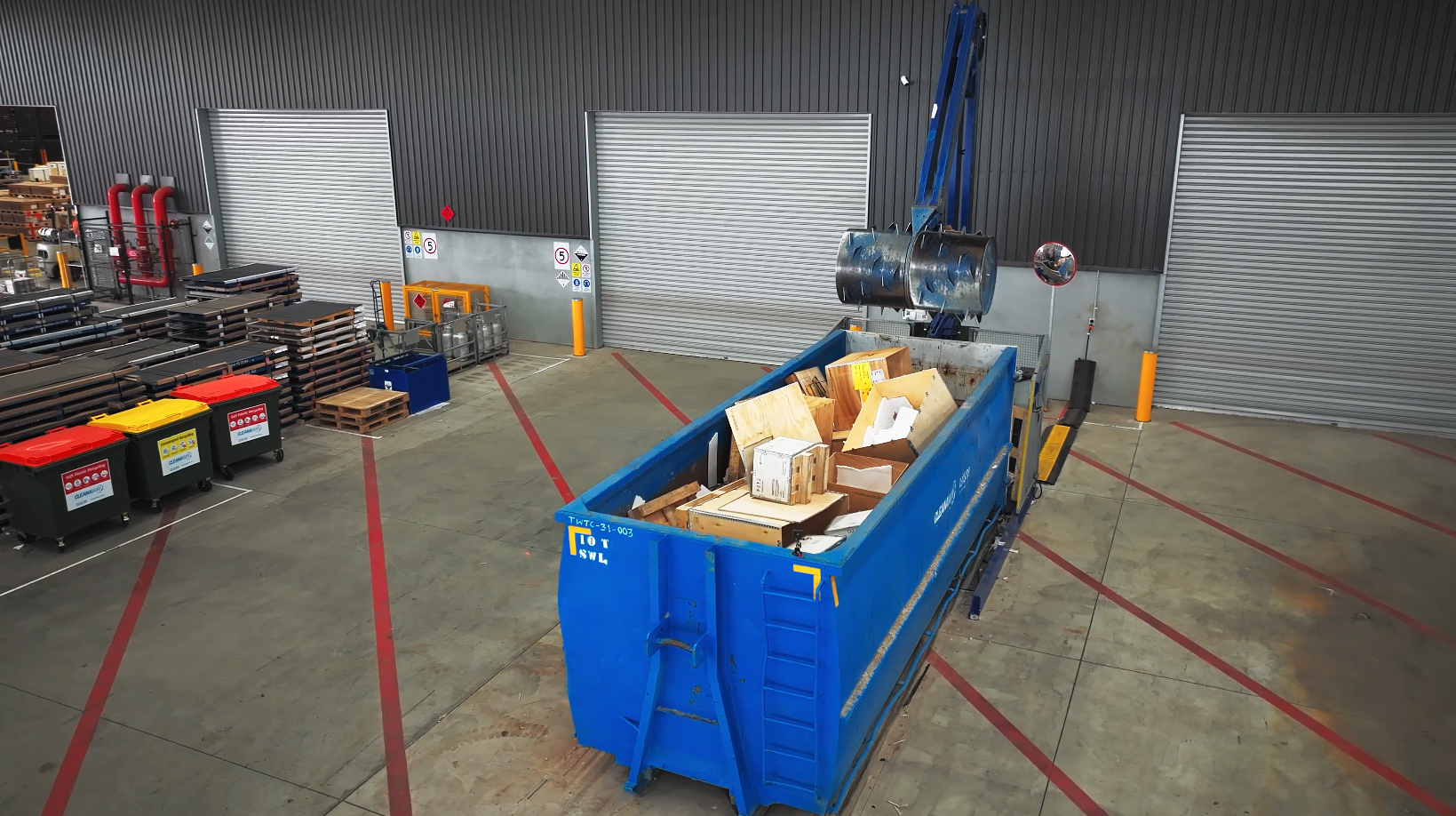
Bulky crates can create a substantial handling task before they even reach the waste container.
If staff routinely dismantle timber packaging, cut down large boxes or move broken sections several times, include that labour in the year-end review. Record the time spent, tools used and manual handling involved, rather than assessing the problem only by the number of bins collected.
For suitable bulky waste, a Bergmann Roll Packer can break down and compact material directly inside an open-top container. This reduces the need for manual dismantling of timber crates and make better use of available bin space. Assess the material, container compatibility, loading method and collection arrangements together.
Cardboard cores and tubes also deserve separate attention. Their diameter, wall thickness and length can make them difficult to handle through conventional equipment and shredders. A Roll Packer provides a practical option for breaking down and compacting suitable oversized cores, subject to assessment of the material and the receiving recycler’s requirements.
For next year’s planning, describe both the waste and the handling task. The priority may be reducing time spent breaking down crates, managing dense cardboard cores or improving container utilisation. Each provides a clearer equipment brief than simply recording “bulky waste”.
Plastics: plan shredding and granulating together
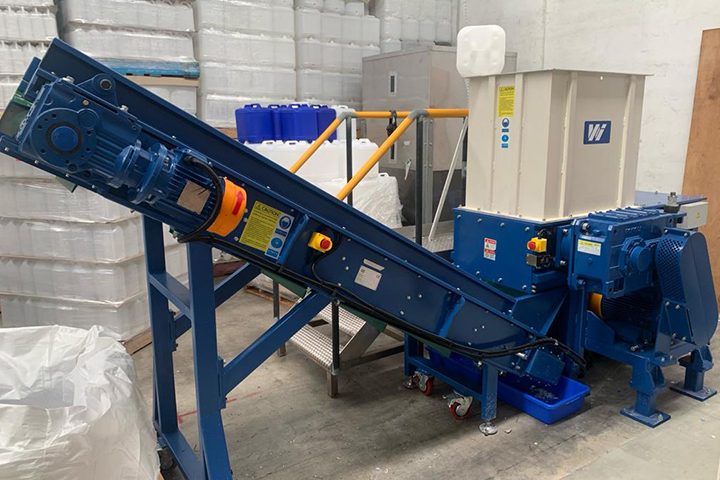
Stretch wrap, bags, rigid containers and production offcuts should not automatically be treated as one processing requirement. Suitable plastic film may be baled for collection, while rigid plastics and production scrap may require shredding, granulating or both.
Shredders can provide the initial breakdown of bulky plastic items. Granulators can then reduce suitable material to a smaller particle size for the next processing or manufacturing stage. The equipment arrangement should follow the material and required output.
Waste Initiatives’ HDPE drum shredding project for Cormack Holdings (Tricorbraun) illustrates this approach. Large plastic purgings could not pass through the company’s existing inline granulators, and HDPE drums also needed size reduction. A WastePac WT2260 single-shaft shredder reduced the material into flakes that could be transferred to the granulators and then returned to the production process.
For the year-end review, identify the plastic type, item dimensions, volumes and contamination, then confirm the output requirements of the receiving recycler or production process. A clear brief should explain where material currently stalls and whether shredding, granulating or a combined system would address that bottleneck.
Food waste: establish the pathway first
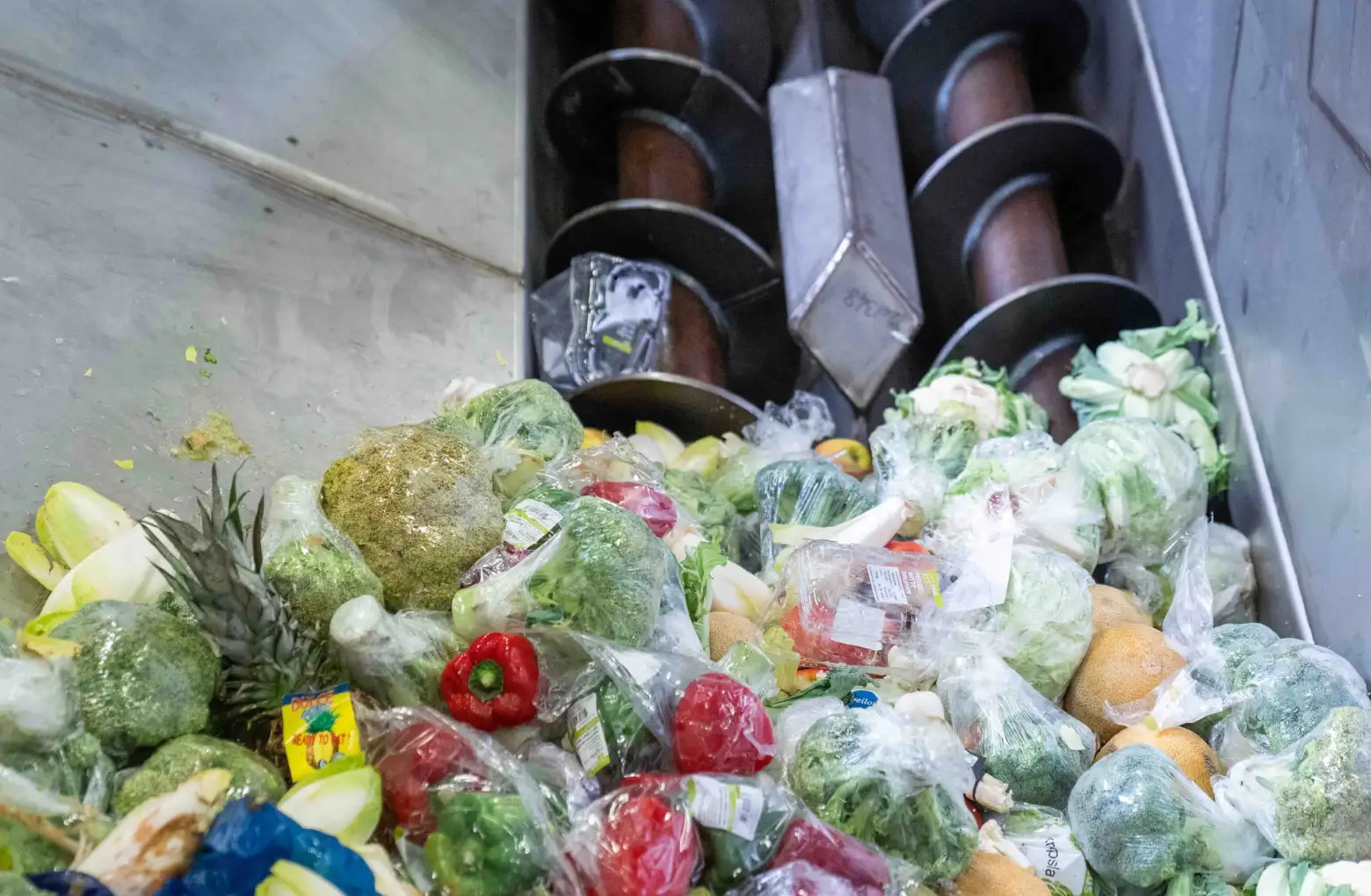
Food waste planning begins with segregation, storage and the requirements of the receiving service or processor.
Where a food organics and garden organics, or FOGO, service is available, confirm what it accepts. Review whether packaging or other unwanted material is entering the stream, and where that material can be removed.
Packaged food presents a different equipment question from source-separated food scraps. At an appropriate processing scale, a depackaging system may provide a stage for separating organic material from packaging before further treatment.
Selection should account for the food and packaging received, preparation requirements, intended capacity and output quality. Both the organic material and packaging rejects need a handling arrangement and destination.
For a business reviewing its own food waste, the immediate priority may be clearer separation or a suitable collection service. For a processor receiving packaged food, it may be a more detailed assessment of depackaging within the treatment process.
General waste: review separation before compaction
Before assessing a residual waste compactor, check whether cardboard, plastics or other recoverable materials are entering the general waste bin.
Where those materials have an accepted recovery pathway, segregation deserves attention in the plan. For suitable residual waste, compaction equipment offers a way to reduce the space occupied by material.
Assess the loading arrangement, container, vehicle access and collection agreement together. Reduced waste volume should not be treated as a guaranteed reduction in collection charges: the result depends on how the contractor services and prices the arrangement.
Use actual collection records to establish the baseline, then test the proposed arrangement against it.
Give existing equipment a place in the plan
The annual review should include the machines already on site. Recurring faults, worn parts, difficult service access and operator training requirements all deserve attention before a new purchase is scoped.
Where shutdown maintenance is planned, confirm the work, timing and parts availability in advance. Cleaning, inspection and maintenance should follow the manufacturer’s procedures and the site’s isolation requirements.
An equipment service assessment can help clarify condition, maintenance requirements and the work needed to prepare existing machines for another year.
Record whether the proposed response is maintenance, a change in operation or replacement. Each needs a different scope and basis for approval.
Councils and processors: specify the constrained stage
For councils and waste processors with projects in planning, the year’s operating records can help refine what an additional processing stage needs to achieve.
Start with incoming materials, peak volumes, contamination and required outputs. Then examine how the proposed equipment connects with the existing facility.
Depackaging within a food waste process
A depacker assessment should extend beyond the separation stage. Include feeding, organic output handling and the management of packaging rejects. Confirm the quality requirements of the downstream process before settling the specification.
Trommels for screening by size
A trommel screen provides a screening stage to separate material into size fractions.
Consider material composition, moisture, screen aperture and required throughput, along with the handling of each fraction. Screening by size should not be assumed to achieve every sorting objective; assess where other separation stages are required.
Mobile picking stations for manual sorting
A mobile picking station may be relevant where the project requires a manual sorting stage and flexibility in deployment.
Review material presentation, conveyor speed, staffing and working conditions together. Include loader access and the removal of picked fractions, so the sorting task is assessed within the full material flow.
Across all three applications, consider site layout, utilities, civil works, access, maintenance and output destinations. The equipment specification needs to describe how material enters the stage and where it goes afterwards.
Build a practical waste plan for 2027
A clear plan connects each operating problem with a proposed response and a way to measure the result.
For each, record the material, operating problem, intended improvement and information still needed. Establish a baseline using the measures relevant to the task, such as handling hours, collections, downtime or tonnes processed.
Separate the work into immediate housekeeping and process improvements, planned maintenance, and equipment or infrastructure projects. Assign an owner and timing to each priority, and identify any information needed before the next decision.
For larger projects, allow for site assessment, engineering, approvals where required, installation, commissioning and operator training. Equipment delivery is one milestone in getting the operation ready to perform.
Before approving that investment, return to the evidence gathered before the clean-up. Can the proposed change explain how the material will move through the operation, and how the result will be assessed?
Waste Initiatives can help assess the material, equipment requirements and wider processing arrangement, with engineering advice, project delivery and ongoing service support.
Speak with the Waste Initiatives team about your waste handling priorities and processing projects for 2027.
Latest news
79 Million Tonnes of Waste: What Australia’s Latest Data Reveals
What Happens After You Order? Inside a Waste Initiatives Project