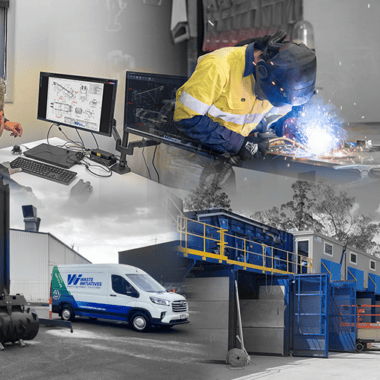
The spotlight naturally falls on high-impact equipment. Depackaging systems. Shredders. Trommels. Sorting stations. Compactors.
But behind every high-performing system is a component that rarely gets the attention it deserves.
Conveyors.
They don’t reduce, separate, or transform material.
But without them, none of it works efficiently.
As the industry shifts toward higher throughput, cleaner outputs, and more integrated systems, conveyors are no longer just a connection point. They are a performance driver.
Why Conveyors Matter
Every waste processing system is only as strong as its weakest link.
In many cases, that weak link is material movement.
Poorly designed conveyors create bottlenecks, inconsistent feed rates, and unnecessary handling. This impacts everything downstream, from sorting accuracy to compaction efficiency.
Well-designed conveyors do the opposite. They create flow.
They ensure:
- Consistent feed into processing equipment
- Controlled presentation for picking stations and separation equipment
- Reduced manual handling across the site
- Safer, more predictable operations
In short, conveyors turn a collection of machines into a system.
Throughput and Efficiency
Throughput is not just about how fast a machine can run.
It’s about how consistently material reaches it.
A high-capacity shredder or depackaging unit will only perform at its rated output if it is fed correctly. Surges, gaps, or uneven loading reduce efficiency and increase wear.
Conveyors play a critical role in stabilising that feed.
They allow operators to:
- Maintain steady loading rates
- Match upstream and downstream equipment speeds
- Reduce idle time and overloading
- Optimise labour by minimising manual intervention
The result is higher utilisation of your core equipment and more predictable processing performance.
Integration Into Systems
Modern waste facilities are no longer built around single machines. They are designed as integrated systems.
From pre-sorting through to final output, conveyors connect each stage:
- Infeed conveyors feeding picking and equipment stations
- Transfer conveyors between equipment and screening
- Metering conveyors controlling feed into various systems
- Outfeed conveyors moving finished material to storage or further processing
Without properly designed transfer points and belt speeds, even the best equipment will underperform.
This is where system design matters.
At Waste Initiatives, our in-house engineering and project consulting team designs complete waste processing systems, ensuring every conveyor is matched to the equipment, material, and throughput requirements across the full process, from infeed to final output.
Designing for Performance
Getting conveyors right starts with understanding the material and the system.
Key considerations include:
- Material type and variability (FOGO, C&D, C&I, plastics, tyres)
- Required throughput across the entire system
- Equipment interfaces and handover points
- Belt type, width, and speed
- Site layout and footprint constraints
- Maintenance access and cleanability
In many cases, small adjustments in conveyor design deliver significant gains across the system.
Better flow.
Cleaner streams.
Higher recovery rates.
Explore conveyor options and system components.
As the industry moves toward more advanced and integrated processing systems, the focus is often placed on the headline equipment.
But the performance of those systems depends on what connects them.
Conveyors are not just supporting equipment.
They are critical infrastructure.
They enable consistency, unlock throughput, and bring systems together.
Talk to our team about a fully engineered waste solution designed around your material, your throughput, and your site. From conveyors through to complete systems, we make sure everything works as one.
Latest news
What Did Your Waste Operation Tell You This Year?
79 Million Tonnes of Waste: What Australia’s Latest Data Reveals