What Should You Plan Now?
Your end-of-year waste review may have identified a problem worth addressing. Cardboard is occupying valuable storage space. Staff are spending too much time handling bulky waste. Food waste needs a better processing pathway, or an existing sorting line is struggling to keep pace.
Identifying the problem is the first step. Turning it into a project that can be assessed, budgeted and delivered requires more preparation.
Whether you are considering a baler, compactor, shredder or a larger recycling facility upgrade, gathering the right information early helps establish a realistic project scope.
If waste equipment or processing infrastructure is on your agenda for 2027, here are eight areas to start planning now.
1. Define the Problem and What You Want to Achieve
Start with a clear description of the current operation and what needs to improve.
“Cardboard management needs improving” is a starting point. A useful project brief explains where cardboard accumulates, how often it is collected, how much handling it requires and how this affects operations.
For a recycling facility, the problem might be material backing up before a sorting stage, excessive manual handling or recovered material requiring additional processing before it can be sold.
Define the intended result. This could include:
- Recovering valuable storage or operational space.
- Reducing waste handling and collection frequency.
- Improving material separation and recovery.
- Increasing processing capacity or reducing downtime.
- Producing material that meets downstream acceptance requirements.
These objectives become the basis for comparing equipment options and measuring project success.
2. Establish Waste Volumes and Operating Patterns
Equipment selection starts with understanding how much material needs processing and when it arrives.
Gather weighbridge records, collection reports, production data or internal waste measurements. Record typical volumes, peak periods and anticipated changes.
Where weight data is unavailable, container sizes, fill levels and collection frequency can provide an initial estimate. Clearly distinguish estimates from measured figures.
Consider how waste enters the operation. A manufacturing facility generating cardboard steadily throughout the day has different requirements from a distribution centre receiving large volumes of packaging in short periods.
For example, a WastePac vertical baler may suit regular cardboard accumulation at a smaller site, while higher volumes could justify investigating a horizontal baler.
For larger processing projects, assess throughput alongside operating hours, material characteristics and the capacity of upstream and downstream equipment.
The objective is to size equipment for actual operating conditions, not simply the average daily volume.
3. Understand the Material Being Processed
Descriptions such as “plastic waste” or “food waste” rarely provide enough information for equipment selection.
Plastic waste might include film, rigid containers, production offcuts or mixed packaging. Food waste may be source-separated organics or packaged products requiring separation. Large cardboard boxes behave differently from dense cardboard cores.
Gather representative photographs, samples where practical, and information about material dimensions, density, moisture, contamination and variability.
These characteristics can significantly influence equipment selection.
For example:
Large timber crates and cardboard cores
A Bergmann Roll Packer may reduce bulky material without staff manually breaking it down.
Rigid plastic waste
Shredding and granulating equipment can prepare material for subsequent recycling processes. See the HDPE drum shredding project.
Include difficult or inconsistent materials in the assessment. Where available, material trials can help establish suitability before finalising the equipment specification.
4. Confirm the Required Outputs
What happens after processing is just as important as the incoming waste.
For cardboard baling, confirm the recycler’s requirements for bale dimensions, weight and material quality. For plastic shredding, establish the required particle size and whether further granulation or separation is necessary.
For sorting facilities, consider how recovered materials will be stored, transferred and collected.
Confirming downstream requirements early helps avoid selecting equipment that processes material efficiently but produces an output unsuitable for its intended destination.
A complete project brief should define both the incoming material and the required finished output.
5. Assess the Site and Equipment Integration
Equipment must fit the site, but available floor space is only one consideration.
Prepare a site plan identifying the proposed installation area, building dimensions, access routes, door openings, overhead clearance and existing services.
Consider how material will be loaded, where operators will work and how finished outputs will leave the area. Allow sufficient room for maintenance, loading equipment and temporary storage.
Larger installations may require assessment of foundations, drainage, electrical supply, dust, noise and weather exposure.
Existing recycling facilities should also identify equipment that must integrate with the proposed system, including conveyors, loaders, screens and sorting stages.
A well-designed processing line needs balanced capacity across its individual stages. Installing a higher-capacity machine may deliver little improvement if the surrounding equipment cannot accommodate the additional material.
6. Build the Business Case Around Total Project Cost
The equipment purchase price is only one component of the investment.
Depending on the project, additional costs may include freight, site preparation, electrical works, civil works, conveying, guarding, installation and commissioning.
Allow for operator training, servicing, wear parts and ongoing operating expenses.
Compare the proposed investment against the existing operation. Useful measures include collection costs, labour hours, storage requirements, downtime and processing performance.
For smaller businesses, a cardboard baler or compactor may be justified through reduced handling and collection requirements. Larger processing projects may also consider recovered material value, processing costs and additional capacity.
Record the assumptions behind expected savings or revenue, particularly where they depend on collection agreements or commodity markets.
For further guidance, see Key Considerations Before Investing in Waste Equipment.
7. Identify Stakeholders, Approvals and Procurement Requirements
Establish who needs to contribute to the project and who has authority to approve it.
Operations, maintenance, finance, procurement and site management may each identify requirements that affect the proposed scope.
For councils and larger organisations, procurement requirements, funding approvals and documentation should be considered before equipment specifications are finalised.
Depending on the installation, planning, environmental, building or other approvals may also be required. Confirm applicable requirements with the relevant authorities and qualified advisers.
Assign responsibility for these investigations early so they do not become unexpected obstacles during procurement or installation.
8. Work Backwards From the Required Start Date
A proposed commissioning date needs a realistic programme behind it.
Allow time for scope development, equipment assessment, approvals, funding, procurement, manufacturing or supply, site preparation, installation and commissioning.
Equipment lead times should be confirmed for the specific configuration rather than assumed.
For operating facilities, identify shutdown windows and how incoming waste will be managed during installation.
Training, commissioning and the transition into normal operation also need to be included.
Working backwards from the intended 2027 start date helps identify which decisions need to be made now.
Planning a Larger Waste Processing Project?
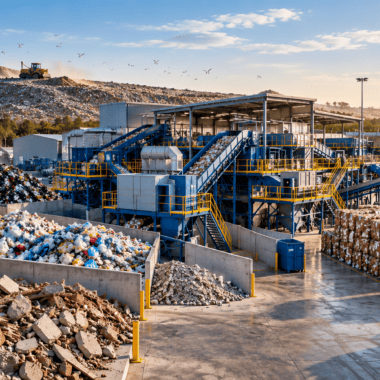
For councils, waste contractors and recycling operators, these same principles form the foundation of a larger infrastructure project.
Three common examples illustrate why early planning matters.
Food Waste Depackaging
A food waste processing project needs clearly defined feedstock sources, packaging types, incoming volumes and downstream treatment requirements.
Systems such as the Mavitec Paddle Depacker can separate packaged organic material from packaging, but the wider project must also consider feeding arrangements, organic output handling and management of packaging rejects.
Trommel Screening
A Vertech trommel screen may be considered where material needs separation into size fractions before further sorting or processing.
Screening requirements depend on material composition, moisture, required separation sizes and how each output fraction will be handled.
Mobile Picking Stations
A Vertech mobile picking station can provide a configurable manual sorting stage for operations recovering selected materials from mixed waste streams.
Planning should establish the required number of sorting positions, material presentation, staffing, loading arrangements and available space for recovered materials.
In each case, the individual machine is only part of the project. Feeding, conveying, screening, separation and output handling must operate together.
Turn Your 2027 Plans Into a Project Brief
You do not need every answer before approaching an equipment supplier.
A useful initial brief should identify the operational problem, available material and volume data, intended outputs, site constraints, budget expectations and target timing. It should also highlight information that still needs investigation.
Waste Initiatives works with businesses, councils and recycling operators to assess equipment requirements and develop practical processing solutions.
From individual waste handling equipment through to integrated recycling systems, the team can assist with equipment selection, engineering, project delivery, installation, commissioning and ongoing service support.
Planning a waste equipment or infrastructure project for 2027? Contact Waste Initiatives to discuss your goals or arrange a site visit. Our team can help map your material journey, identify site constraints and establish the requirements for a practical solution.
Latest news
From Organics to Metals: Meet our Specialists at Waste Expo
What Did Your Waste Operation Tell You This Year?