
Plastic shredders for industrial applications
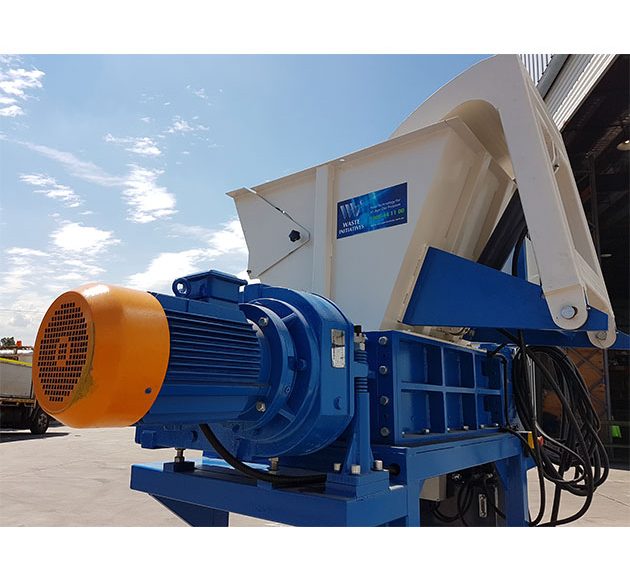
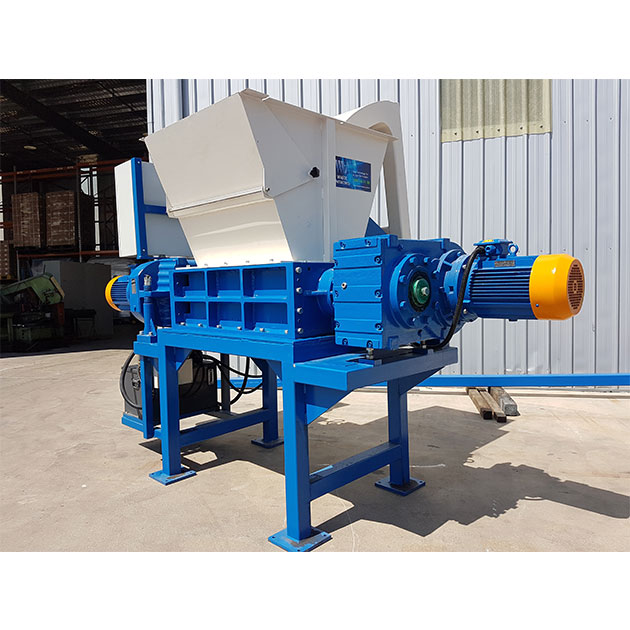
Need to recycle or get rid of plastic? Plastic shredders are key to productive, sustainable and cost-effective waste management. From plastic drums to purgings, materials are reduced in size for easier granulation, remoulding, direct extrusion, or disposal.
Divert plastic from landfills, lower disposal costs, and support resource conservation with Waste Initiatives. Breaking down plastic into smaller scraps for streamlined recycling, transportation, and reprocessing, our shredders are trusted for reliable performance, strength, and durability.
Whether your application calls for a single shaft, dual shaft or four shaft plastic shredder, WastePac offers proven options to suit different material types, throughputs and processing goals.,
Explore plastic shredders for sale
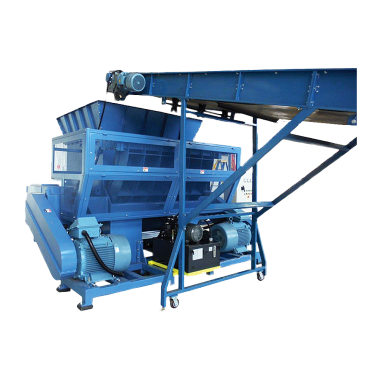
Wastepac WT48200
The Wastepac WT48200 is an industrial shredder with 150kW power and hardened cutters for high-throughput processing of timber, plastics, metals and more.
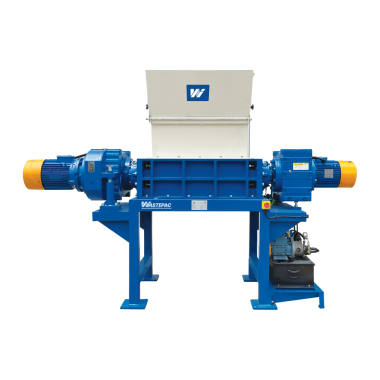
Wastepac GL2180
The Wastepac GL2180 is a low-speed dual shaft shredder for e-waste, tyres, plastics, and MSW. Features 20mm cutters and optional hydraulic drive.

Wastepac WT40120
The Wastepac WT40120 is a heavy-duty shredder with a 1410 x 1200 mm chamber, handling up to 1200 kg/hr of tough waste like pallets, cores, and hard plastics.
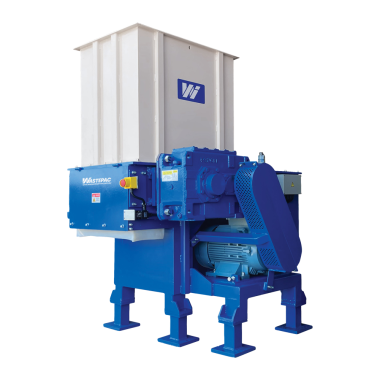
Wastepac WT2260
The Wastepac WT2260 is a compact and versatile shredder ideal for processing hard plastics, paper, timber, and more, designed for low to medium volume applications.
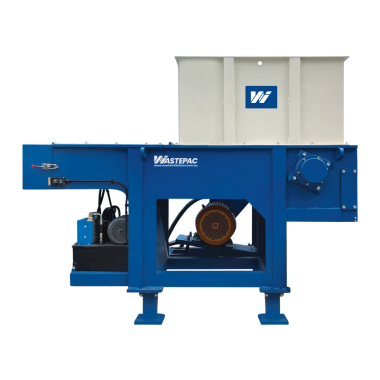
Wastepac WT3080
The Wastepac WT3080 shreds up to 500 kg/hr with three rotor options for film, plastic, timber, e-waste, and more, for diverse small-scale recycling operations.
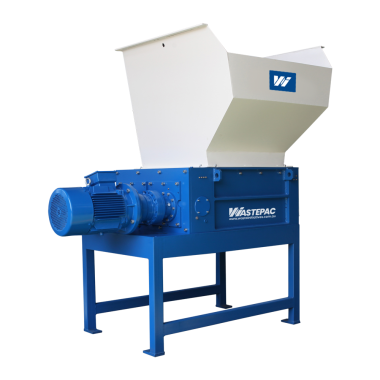
Wastepac FS8080
The Wastepac FS8080 is a four-shaft shredder with the highest cutter count in the FS range. One-pass shredding, cutting, and sizing for complex waste streams.
Unlock the benefits of plastic waste shredders

Enhance efficiency
Boost productivity by automating the size reduction process. A plastic shredder processes large volumes quickly and consistently, removing the need for manual handling or outdated equipment. Reduce blockages and downtime, while keeping throughput high and operations running smoothly.

Minimise waste volume
Plastic waste piles up fast. Break bulky items into compact, more manageable pieces with a heavy-duty shredder. Shredding significantly reduces the space required for storage, handling, and transport. Ultimately, lower waste volume means reduced collections and cost savings across your operation.

Drive sustainability
Do your part for the planet by preparing plastic for effective reuse. Shredding plastic makes it easier to clean, sort, and transform into new products. Ultimately, this eco-friendly step reduces landfill, reliance on virgin materials, energy use and carbon emissions throughout the recycling process.

Cut costs
Invest in cost-effective equipment for any recycling operation. Shredding plastic on-site reduces disposal and transport expenses by lowering waste volume. Plus, pre-shredded plastic is also easier to process and therefore more attractive to recyclers, helping to drive even greater returns over time.

Strengthen security
Safeguard sensitive information with secure destruction techniques. With a plastic shredder, branded items, prototypes, and confidential components can be torn up beyond recovery or reconstruction. This helps to protect intellectual property, reduce compliance risk, and prevent unauthorised reuse.
Frequently asked questions
Plastic is shredded to make recycling faster, cleaner, and more efficient. Reducing plastic into smaller, uniform pieces lowers waste volume, reduces transport and storage costs, and helps washing systems to remove contaminants more effectively.
Shredded plastic is also easier for downstream equipment to process, which improves throughput and reduces machine strain.
Most importantly, though, clean and consistent shred size produces stronger, higher-quality recycled products, making plastic recovery commercially and environmentally viable.
Most types of commercial and industrial plastics can be shredded safely and efficiently using the right equipment. These include:
- Polyethylene Terephthalate (PET): PET is strong, lightweight, and moisture-resistant. It is commonly used for drink bottles and food packaging. Recycled PET is typically turned into textile fibres or new bottles.
- Polyvinyl Chloride (PVC): PVC is durable and resistant to oils and chemicals. It is widely used in pipes, window frames, medical products, and cleaning bottles. Recycled PVC is usually remanufactured into piping and industrial packaging.
- High-Density Polyethylene (HDPE): HDPE is tough and chemically resistant. It is found in milk bottles, detergent containers, wheelie bins, and caps. Recycled HDPE is often used to make pipes, crates, pallets, and recycling bins.
- Low-Density Polyethylene (LDPE): LDPE is flexible and moisture-resistant. Common uses include shopping bags, squeeze bottles, gloves, and food packaging. Recycled LDPE is often made into new bags, tubing, and containers.
- Polystyrene (PS): PS is lightweight and insulating, making it common in disposable food packaging and protective foam. Recycled PS is typically used for insulation boards and frames.
- Polypropylene (PP): PP is heat-resistant and highly versatile. It is used for food containers, medicine bottles, buckets, straws, and caps. Recycled PP is commonly turned into bins, automotive parts, fibres, and pallets.
- Miscellaneous and mixed plastics: Mixed plastics include multi-layer packaging and specialised containers. These materials are usually recycled into custom products such as composite decking, fencing, or automotive components.
Plastic shredders use slow-speed, high-torque cutting shafts to tear plastic into smaller pieces. Rather than cutting at high speed, the machine applies a steady force through hardened cutters.
This design handles thick or bulky plastics efficiently, reduces wear on components, improves safety, and delivers a consistent output size suitable for recycling or transport.
Yes. Single-shaft shredders, such as the WastePac WT48200 and WastePac WT40120, are ideal for shredding thick-walled or rigid plastics. The rotor design actively pulls material into the cutting chamber, ensuring consistent size reduction.
These plastic shredding machines are often used before washing, granulation, or extrusion when a controlled output size is required.
Watch the video below to see a WT40120 in action
Engineered for volume reduction rather than precise sizing, dual-shaft shredding machines like the WastePac GL2180 use two counter-rotating shafts to tear plastic apart at low speed.
Core advantages include the ability to process tough or contaminated plastics, automatic reversing to clear jams, long cutter life, and reliable performance in high-volume recycling applications.
The most suitable shredder for your business depends on the plastic type, throughput volume, and required output size. Space, downstream equipment, and future growth also play a critical role.
Matching the plastic shredder to your material and processing goals ensures better performance, lower operating costs, and long-term reliability.
Our expert team can help you find the perfect plastic shredder for your operations. Contact us for tailored advice today.
Pricing varies based on machine size, shaft configuration, new or used condition, installation requirements, and system integration.
At Waste Initiatives, we offer affordable finance and rental options to reduce upfront capital costs. Enquire now to learn more.
Regular maintenance is key to keeping a plastic shredder in safe and reliable condition. Always follow the manufacturer’s maintenance schedule and operating guidelines.
Essential maintenance practices include:
- Lubricating bearings and moving components with the right oils and greases
- Addressing wear before it becomes a fault with preventative servicing
- Ensuring operators are properly trained in proper machine handling
Access to qualified technicians and locally available spare parts helps minimise downtime and extends the working life of the machine.
At Waste Initiatives, shredder maintenance is backed by Australia-based service teams and readily available spare parts to minimise downtime.
Trusted by clients across Australia


See other shredders
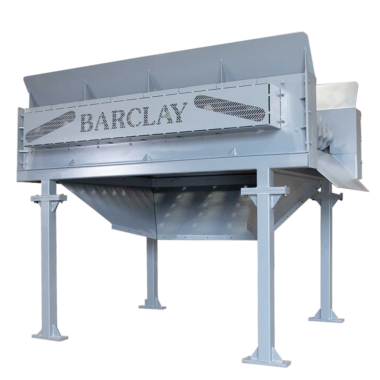
Barclay Classifier
The Barclay Classifier is a versatile tyre classifier with 2″, 4″, or 6″ (50–150 mm) output sizes. Improves efficiency by reprocessing only the rubber that needs further size reduction.

Barclay Primary Tyre Shredder
The Barclay Primary Tyre Shredder, a “workhorse” in tyre shredding equipment that processes tyres up to 72″, producing 4.9″–10″ (124–254 mm) strips in seconds. Built tough for high-volume operations.
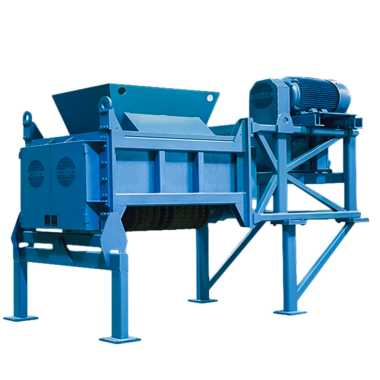
Barclay Secondary Tyre Shredder
The Barclay Secondary Tyre Shredder reduces tyre material to 1.4″, 2″, or 3.6″ (35–90 mm) chips. Ideal for TDF or granulating, it is designed to pair with a primary shredder.
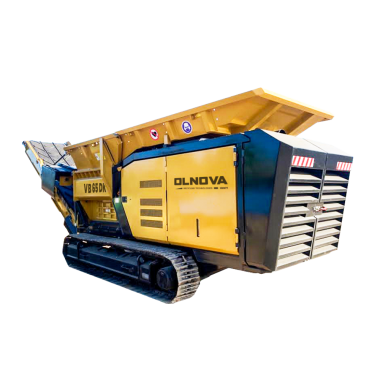
Olnova 65 Series Mobile Shredder
Engineered in Germany, the Olnova 65 Series delivers high-throughput mobile shredding for tough waste streams. Ideal for wood, tyres, C&D waste, white goods and more.
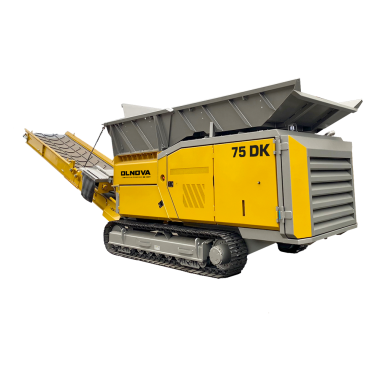
Olnova 75 Series Mobile Shredder
Engineered in Germany, the Olnova 75 Series delivers powerful shredding for tough waste streams—up to 60 T/h—with advanced features and Industry 4.0 tech.
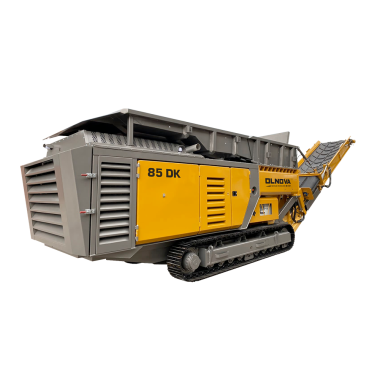
Olnova 85 Series Mobile Shredder
The Olnova 85 Series delivers unmatched mobile shredding power, up to 100 T/h, for tough waste streams like tyres, C&D, bulky waste, and even car bodies.
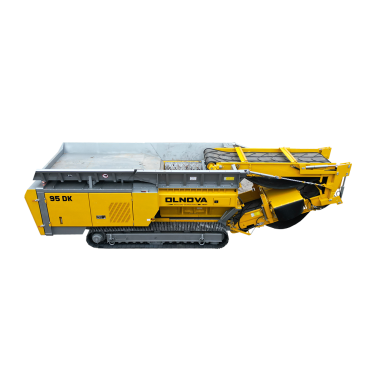
Olnova 95 Series Mobile Shredder
The Olnova 95 Series is the ultimate high-capacity shredder, built for extreme waste streams like car bodies, tyres, and C&D, up to 200 T/h throughput.
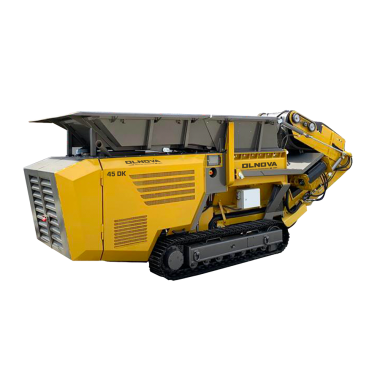
Olnova Model 45 Series Mobile Shredder
Compact yet powerful, the German Engineered Olnova 45 Series delivers exceptional on-site shredding for wood, tyres, green waste, C&D and more, with diesel or electric drive options.
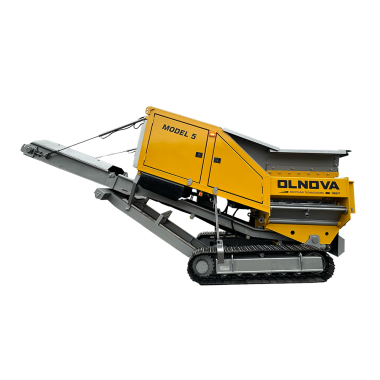
Olnova Model 5 Mobile Shredder
Powerful, mobile and efficient, the German Engineered Olnova Model 5 delivers premium shredding performance for C&D waste, concrete, asphalt, wood and more.
Wastepac WT48200
The Wastepac WT48200 is an industrial shredder with 150kW power and hardened cutters for high-throughput processing of timber, plastics, metals and more.
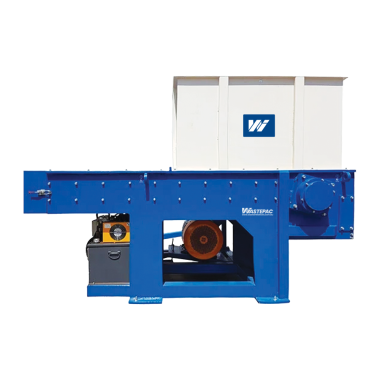
Wastepac WT4080
The Wastepac WT4080 is a heavy-duty shredder for timber, metals, and bulky waste. Large opening, optional force-feeding ram for industrial-grade performance.
Wastepac WT40120
The Wastepac WT40120 is a heavy-duty shredder with a 1410 x 1200 mm chamber, handling up to 1200 kg/hr of tough waste like pallets, cores, and hard plastics.
Wastepac WT3080
The Wastepac WT3080 shreds up to 500 kg/hr with three rotor options for film, plastic, timber, e-waste, and more, for diverse small-scale recycling operations.
Wastepac WT2260
The Wastepac WT2260 is a compact and versatile shredder ideal for processing hard plastics, paper, timber, and more, designed for low to medium volume applications.
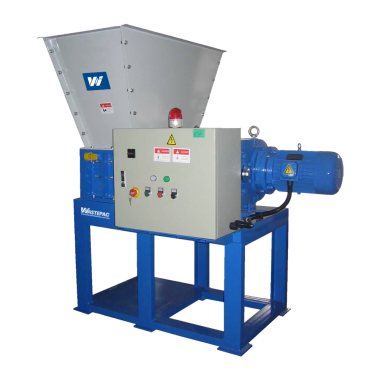
Wastepac GL2140
The Wastepac GL2140 is ideal for product destruction. Shreds up to 400 kg/hr with custom screens, blade options, and optional hydraulic pusher for added efficiency.
Wastepac GL2180
The Wastepac GL2180 is a low-speed dual shaft shredder for e-waste, tyres, plastics, and MSW. Features 20mm cutters and optional hydraulic drive.
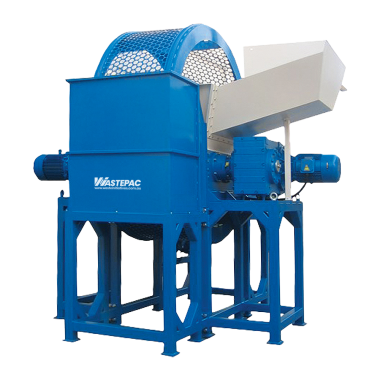
Wastepac GL32120
The Wastepac GL32120 is a mid-sized industrial shredder for tyres, e-waste, and bulky waste. Customisable for high-throughput and heavy-duty applications.

Wastepac FS100120
The Wastepac FS100120 is a four-shaft shredder for tyres, timber, medical and e-waste. 1T/hr throughput with custom blade options for industrial shredding.
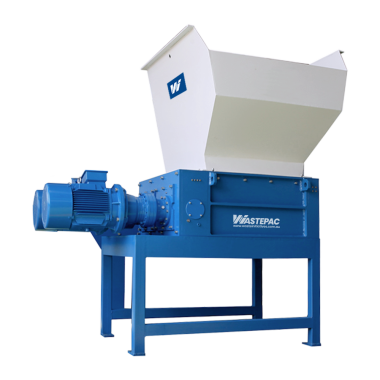
Wastepac FS10080
The Wastepac FS10080 is a four-shaft metal shredder with jam prevention, low-noise operation, and high torque. Customisable for precise high-throughput shredding.
Wastepac FS8080
The Wastepac FS8080 is a four-shaft shredder with the highest cutter count in the FS range. One-pass shredding, cutting, and sizing for complex waste streams.
Looking for waste equipment?
Thanks to over 40 years’ experience in design & supply of high quality waste management equipment, we can offer the latest waste technology available in the world today.
With hundreds of customers in all states & territories of Australia, you’re in good company. We’re worth a call.